You have a budget for AI agents and a team waiting on results. You still need someone who can build them without wasting a year. That’s hard right now. Gartner predicts agentic AI will sit inside 33% of enterprise software applications by 2028, up from under 1% in 2024. It also expects more than 40% of agentic AI projects to be canceled by the end of 2027, because of rising costs, unclear value, or weak risk controls. Choosing among agentic AI development companies is harder than reading a pitch deck. This guide covers ten firms, what they offer, what they charge, and how to pick one. Use it as a 2026 deployment guide too.
Quick Comparison of Agentic AI Development Companies
The order isn’t a ranking. We checked headquarters against company pages and directory listings. Rates come from Clutch and similar profiles, so confirm them before you set a budget.
| Company | US HQ | Founded | Published rate | Good fit for |
| HatchWorks AI | Atlanta, GA | 2016 | $50 to $99 per hour | Agentic automation with nearshore teams |
| Master of Code Global | Redwood City, CA | 2004 | $50 to $99 per hour | Conversational AI that grows into agents |
| SoluLab | Los Angeles, CA | 2014 | $25 to $49 per hour | Smaller budgets, AI with blockchain work |
| Markovate | San Francisco, CA | 2015 | $50 to $99 per hour | Agents built into a product roadmap |
| Intellectyx | Denver, CO | 2008 | $25 to $49 per hour | Banking and manufacturing agents |
| Simform | Orlando, FL | 2010 | Not published | Azure and AWS product engineering |
| Blend360 | Columbia, MD | 2016 | Not published | Data and AI programs at large enterprises |
| DataArt | New York, NY | 1997 | Not published | Regulated industries that need audit trails |
| BairesDev | San Francisco, CA | 2009 | Not published | Teams that hire AI agent developers |
| LeewayHertz | See note below | 2007 | Projects $50,000 to $200,000 | Enterprise generative AI on the ZBrain platform |
LeewayHertz needs a note. Many US directories list a San Francisco base. An SEC filing describes LeewayHertz as a technology consulting company based in India. Its owner, The Hackett Group, is a US public company.
What Is Agentic AI?
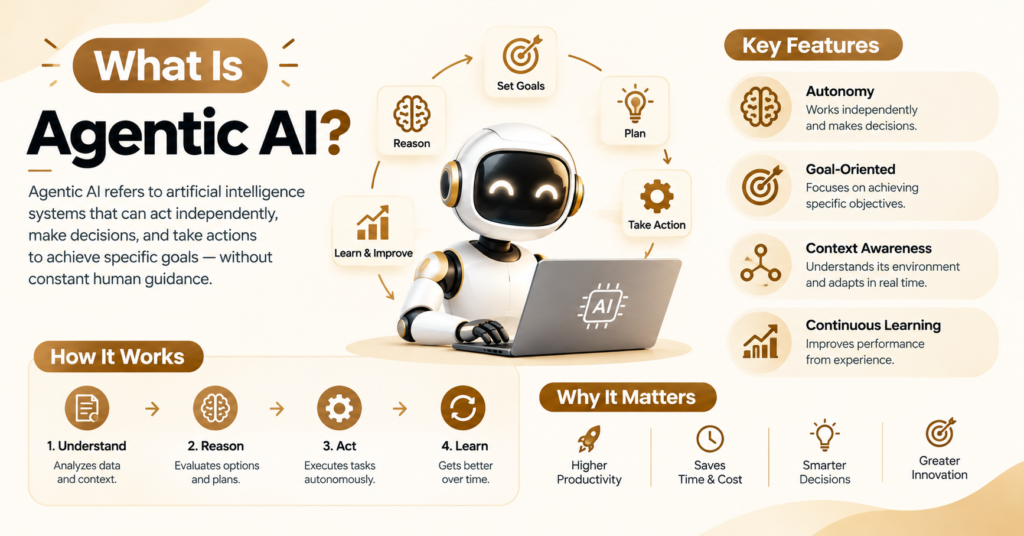
Agentic AI is software that plans its own steps, uses tools, and makes decisions to reach a goal. You give it an outcome, like clearing a backlog of invoices, and it works out the path. These are autonomous AI agents.
Most agents run a loop. They gather data, pick an action, trigger it through an API or app, check the result, and adjust. Tool calling (tool use) lets a model request an action, like a database query or a ticket update. State management tracks what happened across steps. Human-in-the-loop checkpoints let a person approve risky actions.
Agentic AI vs Chatbot vs RPA
| Feature | Chatbot | RPA | Agentic AI |
| Starts from | A user message | A fixed trigger | A goal plus live data |
| Decisions | Scripted or a single reply | Rules only | Autonomous decision-making within set limits |
| When things change | Struggles | Breaks when screens or fields change | Adjusts the plan using results |
| Tools | Few | Fixed scripts on apps | Tool calling across APIs and systems |
| Good for | FAQs | Stable, repeated tasks | Multistep work with exceptions |
Gartner calls out “agent washing,” where vendors relabel chatbots, assistants, and RPA as agentic AI without real agentic features. Ask any vendor to show an agent acting across several tools before you sign.
Main Benefits of Partnering with an Agentic AI Development Company
Agentic AI development companies bring design, build, and operating skills that most teams don’t have yet. Here’s what that gets you.
- Efficiency: Agents take over multistep workflow automation like triage, data entry, and follow-ups. Your staff handles exceptions.
- Real-time decisions: Agents act on live data from your systems instead of waiting for a weekly report.
- Scalability: A tested architecture lets you add agents later without redoing the base.
- Cost control: Gartner says many use cases sold as agentic don’t need an agentic build. An experienced team tells you which ones.
- Security and compliance: Teams with HIPAA, SOC 2, or ISO 27001 experience know where access controls and audit trails belong.
- Strategic edge: A partner brings a playbook for AI transformation, so you learn from earlier mistakes.
- Pilot to production: Gartner says most agentic AI projects today are early-stage experiments or proofs of concept. A team that has shipped production-ready agents can shorten the path.
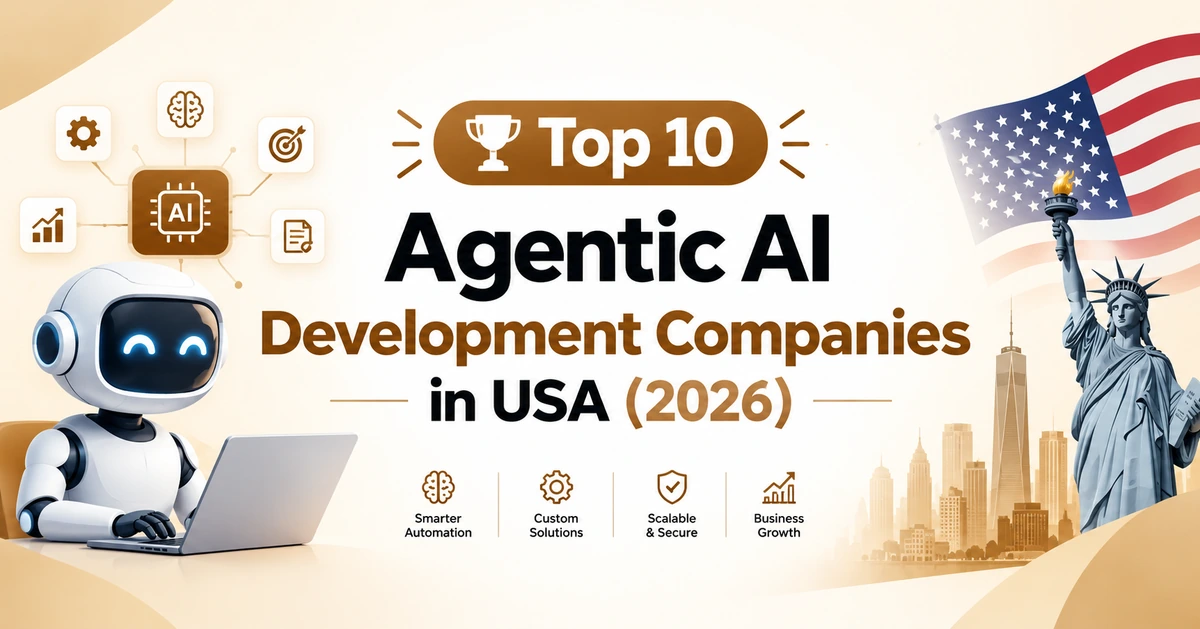
Top 10 Agentic AI Development Companies in USA (2026)
Each profile covers who they are, what they offer, and one detail worth checking.
1. HatchWorks AI
HatchWorks AI was founded in 2016 by Brandon Powell and is based in Atlanta, with offices in the US, Costa Rica, Colombia, and Brazil. The firm calls itself a pure-play AI partner.
Key services:
- AI strategy and roadmaps
- Agentic AI, with intelligent agents and orchestration for complex processes
- Data engineering and data transformation
- Proof of concept (PoC) and MVP builds
- Nearshore engineering teams
Highlight: In March 2026, HatchWorks said Techreviewer.co named it to a list of top US software development companies. Its Clutch profile lists projects from $125,000 to over $1 million.
2. Master of Code Global
Master of Code Global is based in Redwood City, California. A 2026 roundup lists offices in the US, Ukraine, and Poland. Directories give its start as 2004 or 2009. It began with chatbots and voice assistants and now builds agents too.
Key services:
- Chatbot and voice assistant development
- Conversation design
- Generative AI development and LLM integration
- Agentic AI delivery through its LOFT framework
- Custom web and mobile solutions
Highlight: One 2026 vendor roundup credits the LOFT framework for the move from chatbots to agents. A third-party review lists its Clutch rate at $50 to $99 per hour.
3. SoluLab
SoluLab was founded in 2014 and calls itself an AI native, blockchain, and Web3 development firm. It’s based in Los Angeles. Clutch lists $25 to $49 per hour and projects from $5,000 to $100,000.
Key services:
- Custom AI automation
- Machine learning and predictive analytics
- AI development for marketing and fintech teams
- Blockchain and smart contract work
- Mobile and web app builds
Highlight: A Clutch review describes an AI automation system SoluLab built for a fintech platform.
4. Markovate
Markovate is a generative AI company founded in 2015 and based in San Francisco. Its agentic track covers AI agent development, enterprise chatbots, AI copilots, and conversational AI.
Key services:
- AI consulting and proof of concept work
- Generative AI development
- AI agent and AI copilot development
- Computer vision and ML development
- MLOps consulting
Highlight: Markovate built CADIAM, a platform that reads engineering drawings and extracts bills of materials and component data. Clutch shows a $50,000 minimum project size.
5. Intellectyx
Intellectyx is headquartered in Denver, with offshore development centers in India. It also lists a Pasadena address. Directories list its start as 2008 or 2010.
Key services:
- Agentic AI strategy and readiness
- Custom AI agents and AI copilots
- Multi-agent system development
- AgentOps after launch
- Agentic RAG and knowledge assistants
- Data engineering
Highlight: Its banking work covers KYC and AML onboarding, loan origination, and fraud detection. For manufacturers, agents connect to ERP and IoT systems. Clutch lists $25 to $49 per hour.
6. Simform
Simform is a digital engineering company in Orlando, Florida, founded in 2010. Its Clutch profile puts agentic AI, ML, and data science next to product engineering and cloud.
Key services:
- Agentic AI, ML and data science
- Product and platform engineering
- Cloud and data engineering
- Enterprise app modernization
- Azure and AWS consulting
Highlight: Its Clutch profile lists Microsoft Solutions Partner status in four areas, plus Azure Expert MSP and Microsoft Fabric Featured Partner status.
7. Blend360
Blend360 was founded in 2016, is based in Columbia, Maryland, and serves Fortune 500 clients. It has a presence in the UK, India, Uruguay, and Colombia.
Key services:
- AI strategy
- Generative and agentic AI
- Data engineering and data science
- MLOps
- Data governance
- BlendX accelerators for building agents
Highlight: Colombia’s health agency ADRES launched PAACME, an AI tool built with Blend360 to audit medical claims. Reports cite a 96% cut in processing time.
8. DataArt
DataArt began in New York City in 1997. It now has more than 5,000 experts across 40-plus locations. It remains a New York corporation.
Key services:
- AI strategy execution and production scaling
- Data and analytics
- Cloud migration and DevOps
- Product and software engineering
- Managed support and security
Highlight: In 2025, DataArt launched Artisyn, an operating model that combines agents, reusable foundations, and governance so regulated teams keep audit trails. Clutch reviewers praise the quality, and some call the pricing high.
9. BairesDev
BairesDev started in Buenos Aires in 2009 and operates remotely, with more than 4,000 specialists in over 50 countries. Its headquarters is in San Francisco.
Key services:
- Nearshore software development
- Staff augmentation
- Managed teams
- AI and data science
- Software testing and QA
- Cloud computing
Highlight: The model suits teams that want to hire AI agent developers inside their own sprints. Ask which of its AI teams would own your agent project.
10. LeewayHertz
LeewayHertz builds generative AI and blockchain software and runs the ZBrain platform. The Hackett Group bought it in September 2024. The filing lists the price at $7.8 million, subject to working capital.
Key services:
- AI consulting and development
- Generative AI applications
- ZBrain, a low-code generative AI orchestration platform
- Computer vision and machine learning
- Blockchain development
Highlight: Clutch lists typical project costs of $50,000 to $200,000 and reports mixed client views on project management.
Other Names You’ll See
Other agentic AI development companies you’ll see on lists need a closer look. TechAhead’s Clutch profile ranks it among top app developers in India and lists agentic AI work, so we didn’t list it as a US firm. Appinventiv is based in Noida, India, with offices in the US, UAE, and UK. Neurons Lab is based in London and Singapore. Sources disagree on Velvetech’s base: one lists Illinois, another Miami. We couldn’t confirm HQ or agentic scope for Quisitive or Toptal. Check them yourself before you add them.
How We Evaluated These Agentic AI Development Companies
We started with a long list of agentic AI development companies from vendor roundups and directories. We read company sites, Clutch profiles, DesignRush and Built In listings, an SEC filing, and press releases. Where we could, we checked headquarters against two sources. Where sources disagreed, the profile says so. Nobody scored or ranked.
Here’s what we looked at:
- Production track record: agents running in live work, not demos.
- Technical depth: coverage of orchestration, RAG, guardrails, and agent evaluation.
- US compliance: public mention of HIPAA, SOC 2, PCI DSS, or ISO 27001 work.
- Pricing transparency: published rates or minimum project sizes.
- Client reviews: Clutch and directory feedback, including mixed reviews.
- Support: monitoring and AgentOps after launch.
Some firms publish more than others. Gaps in this guide show gaps in public data.
How to Choose the Right Agentic AI Development Company
Lists of the best agentic AI development companies in USA, ours included, only give you a starting point. There’s no single best agentic AI development company for every team. Top agentic AI development companies differ in size, price, and focus. Fit depends on your data, your systems, and your risk rules.
Gartner estimates only about 130 of the thousands of agentic AI vendors are real. So vetting matters. Here’s how to choose an agentic AI development company in seven checks.
- Business need: Write down one workflow and one metric. Gartner advises pursuing agentic AI only where it delivers clear value or ROI.
- Experience: Ask for agents running in production. Ask what broke after launch and how they fixed it.
- Technical depth: Ask how they handle multi-agent orchestration, tool calling, RAG, guardrails, agent evaluation, and observability.
- Method: Look for stages. A PoC, then an MVP, then a production-ready release, each with exit criteria.
- Support: Find out who monitors agents after launch and how fast they respond.
- Compliance: Ask for a SOC 2 report, a HIPAA business associate agreement, or ISO 27001 proof, as your data requires.
- Pricing: Get a fixed-scope PoC quote, a rate card, and a note on who pays for model API costs.
Read reviews on Clutch, GoodFirms and G2. Read McKinsey and BCG’s AI surveys for adoption data that doesn’t come from a vendor.
Red Flags
- No named or described production client
- No plan for agent evaluation
- One framework offered for every problem
- No human review step on risky actions
- Vague pricing
- A promise of full autonomy on day one
Agentic AI Development Companies vs AI Consulting Firms
AI consulting firms usually advise on strategy, governance, and use cases. Development companies build and run the agents. Many do both. Agentic AI consulting alone won’t ship software, so ask who writes the code and who stays on call.
If you plan to hire an agentic AI development company, ask whether the consultants and engineers sit on one team. A split between them slows handoff.
You’ll also see the terms agentic AI solution providers and agentic AI service providers. They mean about the same thing. Judge each agentic AI vendor on delivered work. A good agentic AI partner shows you evidence, and an AI automation company with only RPA experience should say so. Ask for examples of enterprise AI agent solutions in live use.
Agentic AI Tech Stack: What Your Partner Should Explain
An agentic AI tech stack has layers. Your partner should name the choice at each one and say why.
| Layer | Examples | Question to ask |
| Orchestration frameworks | LangChain, LangGraph, CrewAI, AutoGen, Semantic Kernel, LlamaIndex | Why this one for our workflow? |
| Vendor SDKs | OpenAI Agents SDK, Claude Agent SDK | What lock-in comes with it? |
| Workflow tools | n8n | Where does low code stop? |
| Connection standard | Model Context Protocol (MCP) | Which tools connect through MCP? |
| Models | GPT, Claude, Gemini, Llama, Mistral | How do you test and swap models? |
| Cloud | AWS (Bedrock), Microsoft Azure (Azure OpenAI), Google Cloud Vertex AI | Which region holds our data? |
| Business systems | Salesforce, SAP, ServiceNow, HubSpot | How do agents get access, and what can they change? |
MCP is an open standard for linking models to tools and data. Retrieval-augmented generation (RAG) lets an agent pull facts from your documents before it answers. LLM integration connects the model to your apps. The operating layer matters just as much. It covers guardrails, state management, observability, and agent evaluation.
Strong agentic AI software development follows steps like these:
- Pick one workflow and one metric.
- Build a PoC with real data.
- Build an MVP with human review on risky actions.
- Harden it for production with access controls, guardrails, and logging.
- Run it, measure it, and retrain or retune on a schedule.
Generative AI development skills help with steps two and three. Intelligent automation experience helps with the rest. Teams that move from pilot to production plan steps four and five early.
How Much Does Agentic AI Development Cost in the USA?
No public benchmark sets a standard price. The clearest signal is what vendors publish. Most agentic AI development companies publish a minimum project size and little else. Here’s what profiles show for the agentic AI development cost at each stage.
| Stage | Typical scope | Public price signal |
| Basic (PoC) | One agent, one workflow | SoluLab lists projects from $5,000. Markovate’s minimum is $50,000. |
| Intermediate (MVP) | Several tools, human review | LeewayHertz: $50,000 to $200,000 |
| Advanced | Multi-agent system development, more integrations | HatchWorks: $125,000 to over $1 million |
| Enterprise | Many agents, strict compliance | No fixed prices published. A 2026 roundup lists Master of Code Global at $10,000 to over $1 million. |
These are vendor profile figures, not a market average. They change often.
US vs Nearshore vs Offshore Rates
Intellectyx, with offshore centers in India, lists $25 to $49 per hour on Clutch. HatchWorks, with nearshore teams in Latin America, is listed at $50 to $99. Rates for US onsite teams rarely appear on public profiles. Ask for a blended rate in writing. Time zone overlap and rework also change what you pay.
Hidden Costs
- Model API usage, which grows with traffic
- Monitoring and observability tools
- Agent evaluation and test data
- Prompt and retrieval tuning after launch
- Human review time
- Security audits and legacy system integration
Your agentic AI development company cost includes these, so ask for them in the quote. Gartner lists rising costs among the reasons projects get canceled.
Compliance and Security for US Businesses
Ask agentic AI development companies for audit reports and sample logs. Here’s what each rule means in practice.
- HIPAA: There’s no official HIPAA certification. If agents touch protected health information, your vendor should sign a business associate agreement.
- SOC 2: It’s an audit report. Type I covers one point in time. Type II covers a period.
- PCI DSS: It applies when agents see card data. Keep card numbers out of prompts and logs.
- GDPR and CCPA: GDPR covers personal data of people in the EU. CCPA covers California residents. Both affect what agents store and how you delete it.
- ISO 27001: It’s an information security standard. ISO 42001 covers AI management systems.
- OWASP: It publishes a Top 10 for large language model applications, including prompt injection. Ask how the vendor tests for each risk.
- Audit trails: Log every tool call, input, output, and approval.
- Data residency: Check where data is stored and where models run. AWS Bedrock, Azure OpenAI, and Google Cloud Vertex AI offer regional choices for many services. Confirm settings in writing.
Future Trends of Agentic AI
- Platforms spread: Gartner expects at least 15% of daily work decisions to be made autonomously by agentic AI by 2028.
- Multi-agent teams: Several narrow agents will share tasks under one orchestrator.
- Industry-specific agents: Banking and manufacturing agents are already offered by vendors like Intellectyx.
- Deeper integration: Standards like MCP make it easier to connect agents to business systems.
- Governance and safety: Risk controls decide which projects survive.
- People and agents together: Gartner says value comes from enterprise productivity, not only individual task help.
Conclusion
Gartner’s numbers point two ways. Agentic AI is spreading through enterprise software, and many projects will still be canceled. The right agentic AI development company helps you land on the right side of that split. Pick one workflow. Shortlist two or three firms from this list. Ask for a paid proof of concept with clear exit criteria. Check security reports and read client reviews, including the mixed ones.
FAQs
What does an agentic AI development company do?
An agentic AI development company designs, builds, and runs software agents that plan tasks, call tools, and act on your data. The work covers use case selection, LLM integration, RAG, multi-agent orchestration, testing, and monitoring. Some firms add agentic AI consulting for strategy and governance. Ask each one which parts it owns.
How much do agentic AI development companies charge?
Agentic AI development companies price by hourly rate, fixed scope, or a monthly team fee. Public profiles above show hourly rates from $25 to $99 and project minimums from $5,000 to $50,000. Larger builds on Clutch run from $50,000 to over $1 million. Model API costs and monitoring come on top.
How long does an agentic AI project take?
No public source gives a standard timeline, and we won’t make one up. Time depends on data access, number of tools, and review steps. Ask each vendor for dated stages: PoC, MVP, then a production-ready release, with exit criteria for each.
What is the difference between an AI agent and a chatbot?
A chatbot answers messages from a script or a model. An AI agent takes a goal, picks steps, uses tools, and checks results. The table earlier shows how both differ from RPA.
Should we build agents with our own team or outsource?
Build with your own team if you already have engineers who’ve shipped agents and a plan to monitor them. Outsource if you lack that experience or need a PoC fast. Many teams mix both. A partner builds the first agent, and your staff takes over operations. If you hire AI agent developers through a staffing model, agree on knowledge transfer early.
Which compliance rules apply to AI agents?
It depends on your data. HIPAA applies to protected health information, PCI DSS to card data, and GDPR and CCPA to personal data. SOC 2 and ISO 27001 show a vendor’s security controls. Your legal team should confirm which rules apply.
Do US-based firms always keep work in the US?
No. Several agentic AI development companies in USA run offshore or nearshore centers. Intellectyx, for example, says its development centers are in India. Ask where your data lives and who can access it.

Senior SEO Content Marketing Manager at Trendusai.com
Rashida Hanif is a Senior SEO Content Marketing Manager, specializing in data-driven content strategy and SEO. She helps brands improve online visibility through keyword research, content planning, and AI-powered marketing insights.