
Bringing in an external AI developer or consultant can cut months off a project timeline. But the second you hand over a dataset with customer names, transaction records or internal documents in it, you’re putting someone outside your organisation in charge of files that you’re legally on the hook for.
That doesn’t mean you need a massive IT budget or a dedicated security team to manage things properly. You just need to get a few key decisions right before, during and after the handover, because those are the exact moments where things tend to go wrong for people who haven’t done this before.
Know What You’re Handing Over Before You Share It
Forget the technical side for a minute. Sit down and list every file you’re planning to send, then ask yourself a blunt question: does each one actually need to leave your building? If a contractor is building a recommendation engine, they probably don’t need your full customer database. A stripped-down, anonymised version will do. Cut the columns that aren’t relevant, swap real names for placeholder IDs and remove postcodes or phone numbers wherever you can.
When your dataset contains personal information, the UK’s Data Protection Act 2018 will apply regardless of where the contractor is based, so long as the data belongs to UK residents. Keep a written record of what was shared, when it was shared and what the contractor is allowed to do with it. It doesn’t have to be anything fancy, but that record absolutely has to exist if you want to cover yourself later.
How to Hand Over Files Without Losing Control
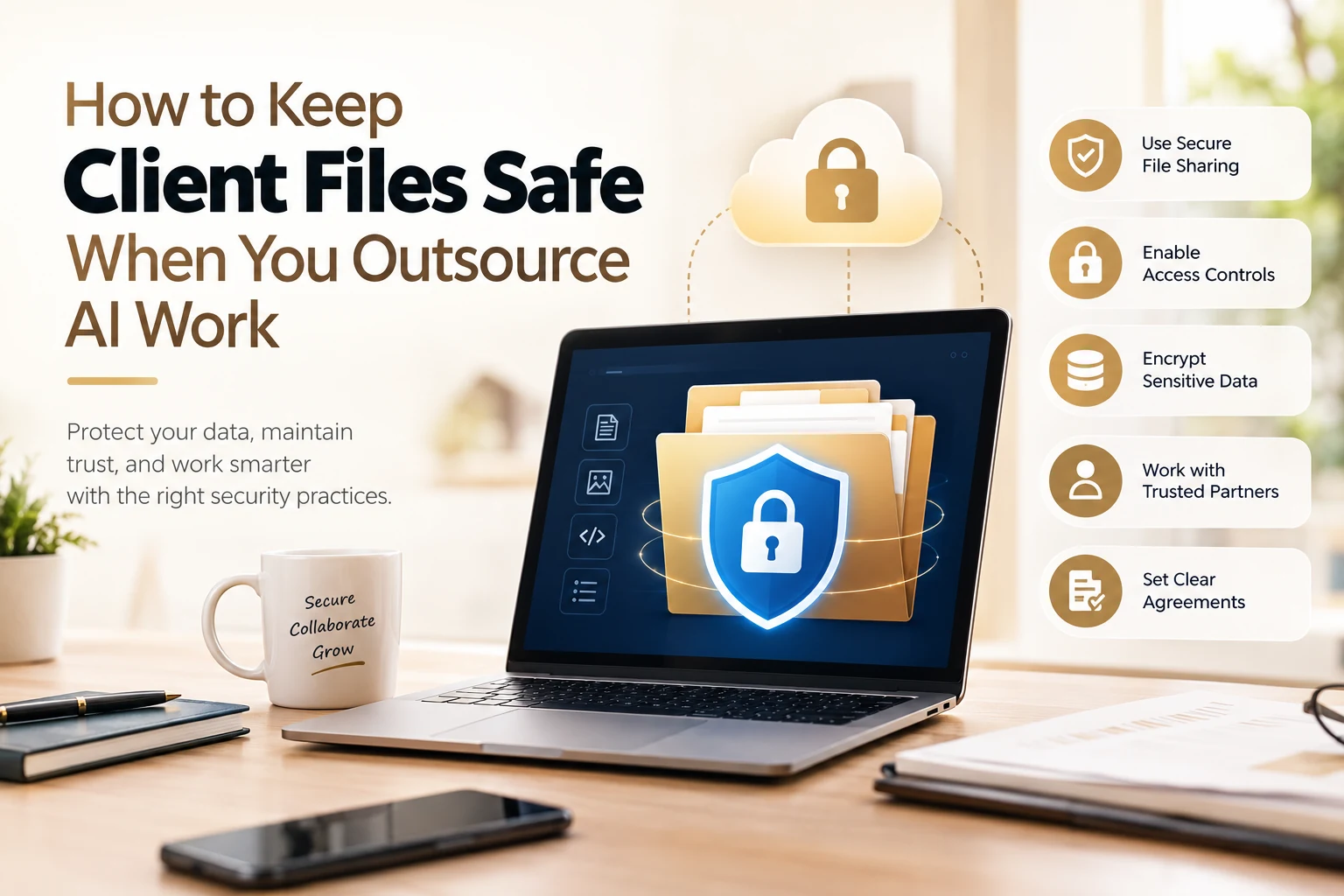
Here’s where first-timers trip up most often. They’ll drop files into a shared drive folder or fire off a WeTransfer link, and suddenly the contractor has a permanent copy sitting on their machine with no expiry and no way to claw it back. But you can easily avoid this by using secure free cloud storage with access control that lets you revoke access whenever you need to. That way, once the contract ends or the project wraps up, you simply switch off the link and the files disappear from the contractor’s reach.
Lock permissions down so the contractor can only view or download the specific files they need. Don’t give them access to the whole folder. If the platform supports x`password-protected links, use them, and always set an expiry date on every shared link so you’re not relying on your own memory to go back and tidy things up weeks later.
Put It in the Contract
A verbal agreement won’t cut it here. Your contract with the AI developer needs a clear data processing clause spelling out what the contractor can and can’t do with your files. It should state that the data won’t be used to train other models, won’t be passed to subcontractors without your written permission and will be deleted within a set number of days once the project ends.
For any personal data you’re sharing, you’ll also need a data processing agreement that meets GDPR standards. Templates are easy to find online, but make sure yours covers data breach notification timelines. The contractor should be obligated to report any incident to you within a fixed window, not whenever they get around to it.
What to Check Before You Upload Anything
Run through a quick checklist before any files leave your machine.
- Has the contractor confirmed how they’ll store and encrypt the data on their end?
- Do they use multi-factor authentication on their accounts?
- Have they signed a non-disclosure agreement?
- Do you have a dated record of exactly which files were sent?
These are the bare minimum any responsible business should tick off before handing sensitive information to a third party, and skipping even one of them can leave you exposed if something goes wrong down the line.
What Happens After the Project Ends
Most people only think about the handover at the start. They forget there’s one at the end too. Once the work is finished, get written confirmation that the contractor has deleted all copies of your data. That means backups, local downloads and anything stored in their development environment. Don’t just assume it’ll happen on its own, because it won’t.
If you set up revocable storage links at the beginning, this becomes much easier. You’ll already be able to cut access from your side, and you’ll have a log showing exactly when it was done. That kind of paper trail will matter if a client or regulator ever asks what happened to the data after the project wrapped up.
A Handover You Don’t Have to Worry About Later
Outsourcing AI work is only going to become more common as the tools get cheaper, and businesses that nail the data handover from day one will save themselves serious headaches later. Share only what’s needed, use storage you can actually control, put everything in writing and make sure you close things off properly when the job is done.
This doesn’t require specialist software. It just takes a bit of planning before you hit send, and if you give the handover the same attention you’d give any other part of the project, your clients’ data stays protected and so does your reputation.

Senior SEO Content Marketing Manager at Trendusai.com
Rashida Hanif is a Senior SEO Content Marketing Manager, specializing in data-driven content strategy and SEO. She helps brands improve online visibility through keyword research, content planning, and AI-powered marketing insights.