
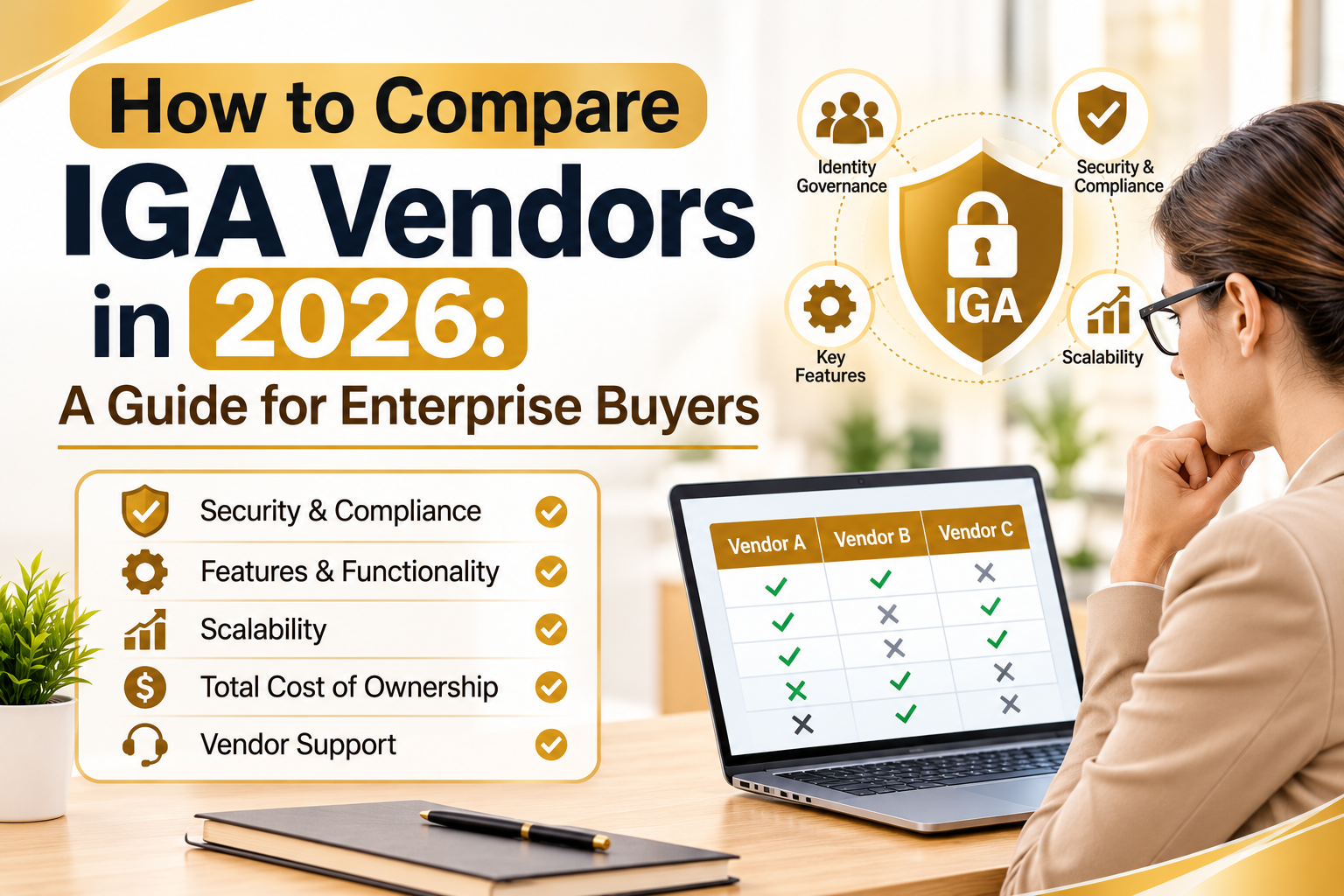
Identity governance and administration vendors describe themselves in similar terms, which makes side-by-side comparison harder than it should be. Terms like “unified” and “AI-driven” appear everywhere without a shared definition. Enterprise buyers need a method that cuts through the language and tests what each product does in their environment. The sections below cover architecture, integration depth, identity coverage, implementation and operating costs, the role of comparison resources, and how demonstrations can validate claims.
Architecture Shapes Everything Else
A platform’s architecture influences how it deploys, scales, and fits existing infrastructure. Some products are delivered as cloud services, others are installed in the customer’s environment, and many offer hybrid models. Each choice affects who maintains the system, how updates arrive, and how data moves.
Ask where identity and entitlement data is stored, how it is protected, and whether regional data requirements can be met. Examine how the platform collects information: API calls, connectors running inside the network, or file-based imports. These choices determine reach into legacy systems and the burden on internal staff.
Scalability deserves specific questions. Request numbers for deployments of similar size, such as how many identities and applications a customer manages, and how performance holds during large review campaigns. Architecture also affects resilience, so ask what happens if a connector or component fails mid-process and how recovery works.
Integration Depth and Identity Coverage
Counting connectors says little about quality. Depth means the platform can read detailed entitlements, provision and deprovision accounts, and keep data current. A shallow integration might list users but miss the roles and fine-grained permissions that matter during reviews.
Check each critical application on your list individually. Ask whether the connector is built and supported by the vendor, how it handles customization, and what it does when the application changes.
Coverage should also span every kind of identity. Employees are the familiar case, but contractors, service accounts, API keys, and automated agents now hold significant access. Ask how each category is discovered, whether it can be assigned an owner, and how reviews and retirement work. Machine and AI-agent identities in particular are growing quickly, and platforms vary in how mature their support is. Request concrete examples instead of general assurances.
Implementation Resources and Total Operating Cost
License price is one part of the expense. Implementation often requires configuration, integration work, data cleanup, and process design. Ask the vendor what a typical deployment of your size involves, how long it takes, and how much falls to your team versus the vendor or a partner.
Ongoing costs matter as much. Consider administration staffing, connector maintenance, upgrades, training, and support tiers. Pricing models vary, with some charging per identity, per application, or by module, so model costs at your current size and at projected growth.
Ask references about surprises. Costs that commonly emerge include custom connector development, extra environments for testing, and services needed to fix source data. A vendor confident in its estimates should be willing to provide a written scope and discuss assumptions openly. Comparing total cost over several years gives a fairer picture than comparing first-year licenses.
Using Comparison Resources Wisely
Search results for top iga vendors 2026 can help assemble candidate names, but dated rankings still need current product evidence. Compare how each provider handles the organization’s actual identities and applications, and check the date and authorship of any published ranking.
Treat such material as a starting point. Check who authored it, how criteria were defined, and whether the vendors discussed were evaluated hands-on. Verify publication dates, since offerings change quickly. Anyone using a list of enterprise governance vendors should confirm that the guide’s year and contents match the date they are reading.
Cross-reference multiple sources, including analyst reports, peer reviews, and conversations with practitioners at similar companies. Then convert what you learn into your own requirements. A comparison written for a general audience cannot account for your applications, regulations, or staffing.
Validating Vendor Claims Through Demonstrations
Demonstrations are most useful when the buyer controls the script. Provide each vendor with the same scenarios drawn from real needs, such as onboarding a contractor into several applications, running a review that includes service accounts, and removing access after a departure.
Insist on seeing the product operate on realistic data, not a polished sandbox. Ask to see the configuration steps, not just the finished result, since effort required to build workflows shapes long-term cost. Probe edge cases, including exceptions, failed provisioning, and reviewers who do not respond.
Take notes against a shared scorecard and have multiple evaluators attend. Follow up by requesting a proof of concept on a limited set of your applications. Anything a vendor claims in a presentation should be confirmed in writing or in a hands-on test before it influences a purchase.
End Note
Comparing identity governance vendors rewards preparation. Clear requirements, attention to architecture and integration depth, and realistic cost modeling matter more than feature lists. Published guides help with orientation but cannot replace testing against your own environment. Buyers who script demonstrations, verify claims, and document their scoring tend to reach decisions they can defend and live with.

Senior Content Manager at TrendusAI
Rashida Hanif is a content strategist at Trendusai.com, creating informative articles on artificial intelligence, emerging technologies, and digital solutions. She focuses on delivering valuable insights that help readers understand AI innovations, software development, and technology trends.