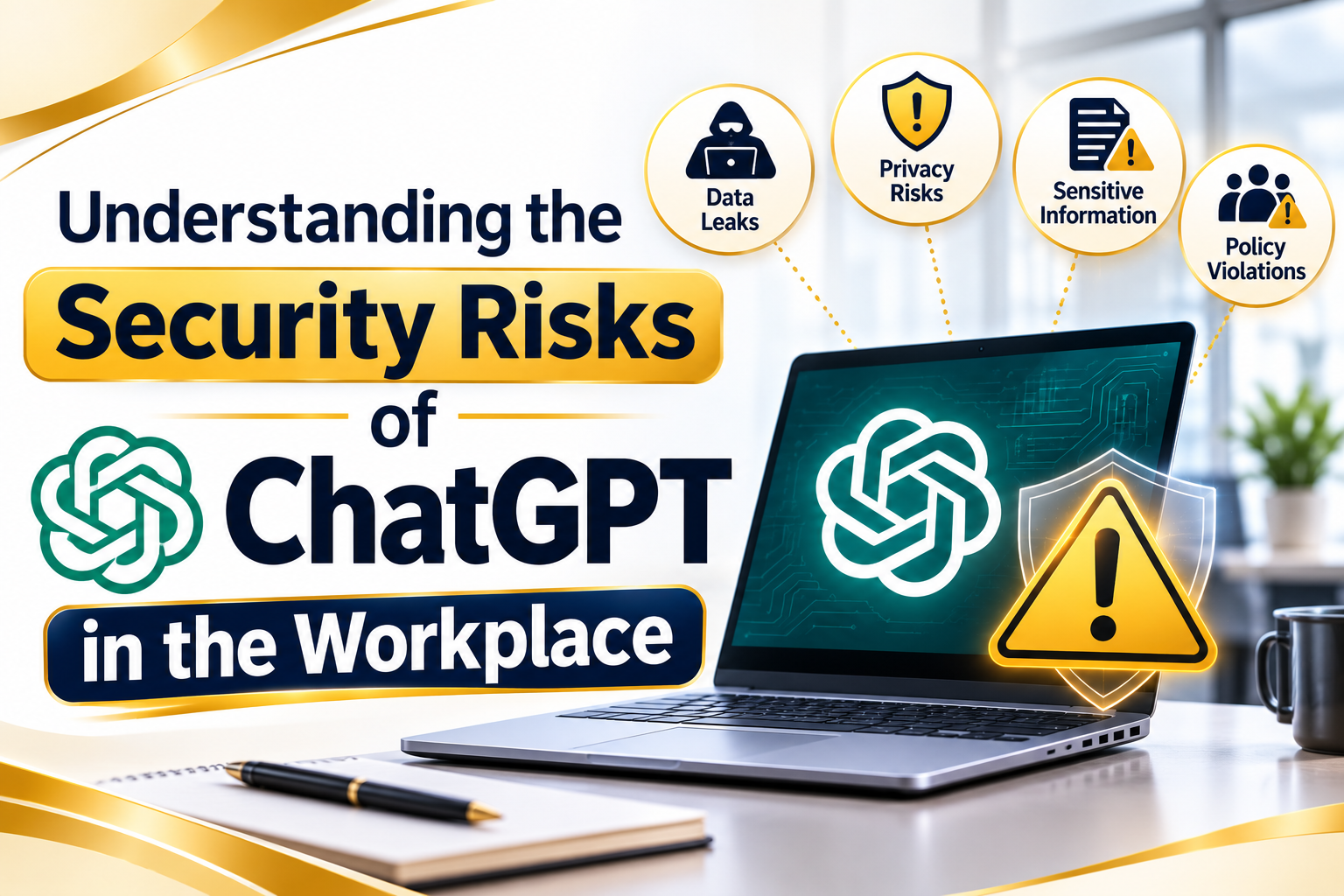
ChatGPT has become a fixture in daily work for a huge number of employees, used for drafting emails, summarizing reports, writing code, and answering questions that once required a search or a colleague’s input. That widespread adoption happened largely without formal oversight, and many organizations are only now reckoning with what that means for their data and systems. Understanding where the actual risk lies, rather than treating ChatGPT as either a harmless productivity tool or a blanket threat to be banned outright, gives security teams a clearer foundation for building controls that address the real exposure points.
Data Leakage Through Everyday Use
The most immediate risk comes from what employees type into the chat window itself. Someone drafting a client email might paste in the client’s contact details and deal terms for ChatGPT to polish. A developer debugging an issue might paste a chunk of proprietary source code to get help identifying an error. A manager summarizing a confidential report might upload the document directly. None of these actions feel like a security incident from the employee’s perspective, they feel like using a helpful tool, but each one potentially exposes sensitive information to a third-party system outside the organization’s control.
The concern extends beyond a single interaction. Depending on account settings and the specific service tier in use, submitted data may be retained and, in some cases, used to improve the underlying model, meaning information entered once could theoretically resurface or influence outputs shown to unrelated users later. Even when a provider’s policies limit this kind of retention for enterprise accounts, free consumer versions of ChatGPT often carry looser data handling terms, and many employees using the tool at work are logged into personal accounts with exactly those looser protections in place.
Shadow AI and the Visibility Problem
Shadow AI, the use of AI tools outside any sanctioned or monitored channel, compounds the data leakage problem by making it invisible to the organization entirely. An employee using a personal ChatGPT account on their own device, or even a work device without any monitoring in place, leaves no trace in corporate logs. Security teams have no way to know what was shared, when, or by whom, which means even a well-designed incident response plan has nothing to respond to until damage has already surfaced elsewhere.
This visibility gap tends to grow rather than shrink over time as more employees discover new use cases for the tool independently, often without realizing colleagues elsewhere in the organization are doing the same thing with equally little oversight. Surveys of workplace AI adoption have consistently found that actual employee usage of tools like ChatGPT significantly outpaces what IT and security teams believe is happening, a gap that widens further when organizations lack any approved alternative, since employees without a sanctioned option simply default to whatever consumer tool is most familiar.
Unsafe or Inaccurate Outputs
Beyond data exposure, the security risks of ChatGPT extend to the reliability of what the tool actually produces. Generative AI models can produce confident-sounding but factually incorrect answers, a limitation that becomes a genuine business risk when employees use ChatGPT output without verification in contexts like legal research, financial analysis, or technical documentation. An employee who trusts a fabricated citation or an incorrect code snippet without checking it can introduce errors into work product that then propagates further before anyone catches the mistake.
There’s also a subtler risk tied to code generation specifically. Developers using ChatGPT to write or debug code sometimes incorporate suggested snippets without fully reviewing them for security vulnerabilities, a practice that can introduce flaws into production systems that wouldn’t have made it past a more careful manual review process. The convenience of AI-assisted coding doesn’t remove the need for the same scrutiny applied to code written by a person, but the speed and confidence of the tool’s output can make that scrutiny feel less necessary than it actually is.
Risks From Third-Party Plugin and Integration Ecosystems
ChatGPT’s plugin and integration ecosystem, along with the growing number of third-party tools that connect to it through APIs, introduces a further layer of exposure beyond the core chat interface itself. Each integration represents an additional party with some level of access to data passing through the connection, and the security practices of these third-party developers vary considerably, with far less consistency than the oversight applied to the core platform.
A few specific concerns tend to come up repeatedly when organizations examine this part of their exposure:
- Overly broad permissions, where a plugin or integration requests access to more data or system functionality than its actual purpose requires.
- Inconsistent vetting standards, since third-party developers building on top of ChatGPT don’t necessarily undergo the same security review as the core platform provider.
- Data flowing through additional intermediaries, extending the chain of parties with potential access to information beyond what an employee might assume when using a single integrated tool.
- Authentication and session risks, particularly for integrations that request access to other connected accounts or systems as part of their functionality.
Employees enabling a plugin or connecting a third-party tool often do so without fully understanding what data access they’re granting, treating the decision the same way they’d click through a routine software installation rather than recognizing it as a genuine access control decision with real consequences.
Building a Response That Matches the Actual Risk
Addressing these risks effectively starts with visibility, since organizations can’t manage what they can’t see happening across their network and endpoints. Security platforms like Mimecast that already monitor for data loss and unusual access patterns across email and collaboration tools provide a natural extension point for gaining similar visibility into AI tool usage, flagging when sensitive data appears to be moving toward an unsanctioned destination rather than discovering the exposure only after the fact.
Beyond monitoring, providing an approved, enterprise-grade alternative matters considerably, since employees blocked from a familiar consumer tool without any sanctioned replacement tend to find workarounds rather than simply stopping their AI use. Clear data handling policies, technical controls limiting which tools and integrations are accessible on managed devices, and ongoing employee education about what these tools can and cannot be trusted with together address the full range of exposure, rather than focusing narrowly on just one piece of the problem while leaving others unaddressed.
Key Takeaways
The security risks of ChatGPT in the workplace span a wider range than most organizations initially assume, from the straightforward danger of employees pasting sensitive data into a chat window to the harder-to-see problems of shadow AI usage, unreliable outputs treated as fact, and third-party integrations with inconsistent security practices. None of these risks are reasons to avoid the tool entirely, given the genuine productivity benefits it offers, but they do require a deliberate response built around visibility, approved alternatives, and clear policy rather than hoping employees will independently exercise caution with a tool that rarely signals when something risky is happening.

Senior Content Manager at TrendusAI
Rashida Hanif is a content strategist at Trendusai.com, creating informative articles on artificial intelligence, emerging technologies, and digital solutions. She focuses on delivering valuable insights that help readers understand AI innovations, software development, and technology trends.