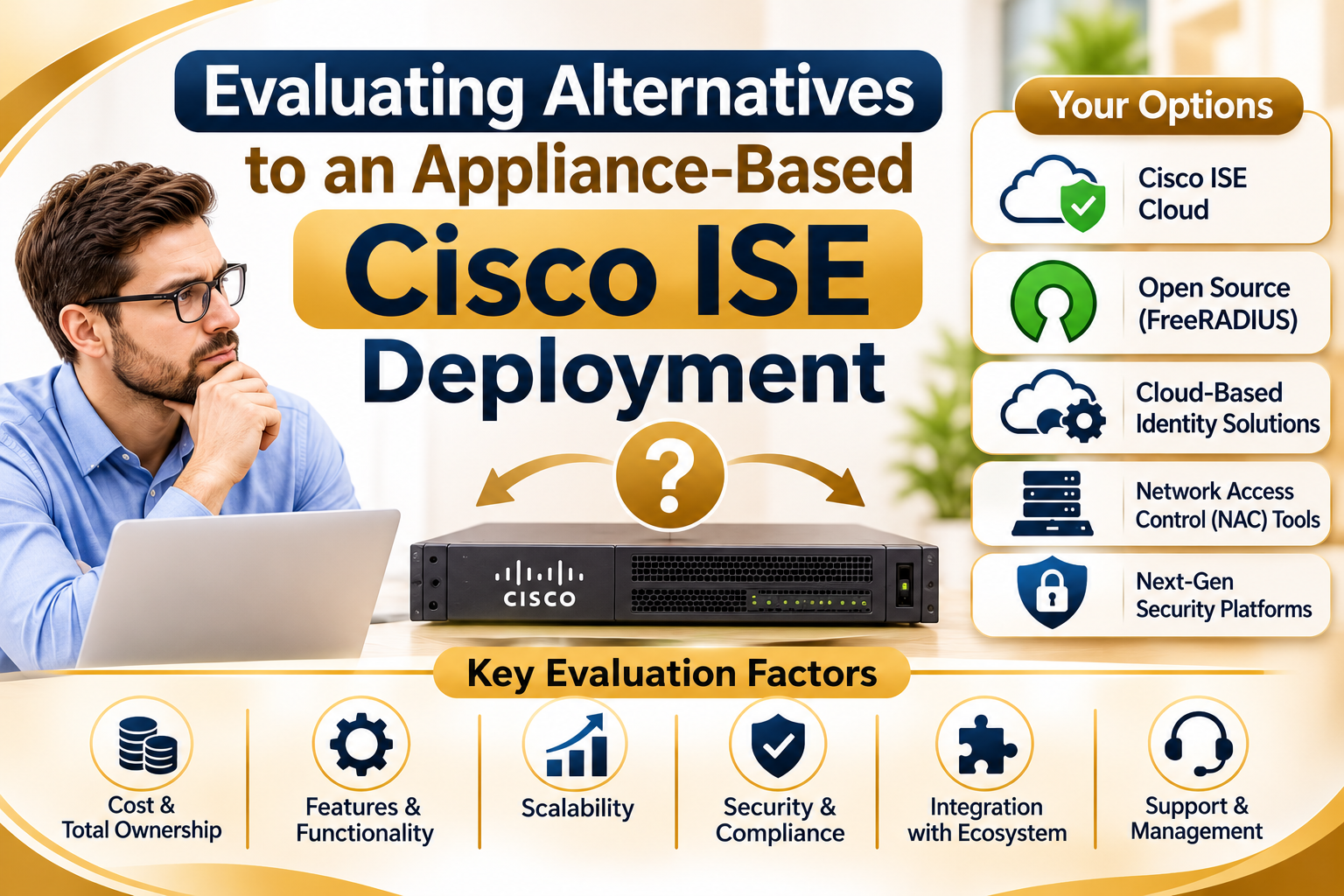
An appliance-based Cisco Identity Services Engine deployment often begins as a sensible project. Years later, the hardware is aging, the software version has fallen behind, and the one engineer who understands the policy set is considering a new job. Replacing the platform is tempting, yet a rushed swap can break wireless logins, lock out printers, and strand devices nobody remembered. A careful evaluation starts by asking what the current system actually does. Only then does it ask what could do the same work.
Why Teams Reopen the Question
Several pressures tend to arrive together. Hardware reaches the end of support, upgrades demand maintenance windows, and capacity planning for each site eats into the week. Remote work has also changed where devices connect, which makes a rack in one data center a less natural home for authentication.
Cost drives some reviews, though not always in the way people expect. A renewal quote may look steep, but the larger expense is often staff time spent patching, troubleshooting, and rebuilding policies after each upgrade. Others reopened the question after an outage, when one failed node showed how much depended on a single platform.
None of these reasons proves a replacement is warranted. They are prompts to measure the present system honestly. A team that can describe what the platform does today, what it costs in effort, and where it has failed is far better placed to judge any alternative, including the option of simply upgrading what already exists.
Mapping Current Authentication Requirements and Device Types
Start with an inventory of authentication methods. List what is in use: 802.1X on wired and wireless networks, MAC-based checks for devices that cannot authenticate, administrator access to network gear, VPN, and guest portals. Note which directories and identity providers feed each method, since integrations are often the hardest part to reproduce elsewhere.
Device compatibility needs its own pass. Every type that connects deserves a row, whether managed laptops, personal phones, printers, cameras, badge readers, or medical and industrial equipment. Record how each is identified and what access it receives. Unusual devices are where migrations fail, because a policy written years ago may quietly handle them.
Real data checks the list. Authentication logs show which policies match traffic, which rules never fire, and which exceptions have piled up. Many teams discover that a large share of their policy set is unused. Cleaning that up before any move reduces risk and workload, whichever platform comes next. It also turns a vague wish to replace the system into a written set of requirements that every candidate can be asked to meet.
Introducing Cloud NAC as an Option to Investigate
Once requirements are documented, evaluate a Cisco ISE alternative against the same devices, authentication policies, and operational needs as the existing deployment. A cloud-delivered model may change who manages servers and updates, but those responsibilities and integration assumptions still need testing.
Suitability depends on the capabilities the organization genuinely needs. A company that relies mainly on certificate-based authentication and straightforward segmentation may find a cloud service covers most of its use. One that depends on deep posture checks, custom integrations, or strict data residency may find gaps. Other paths exist too, such as upgrading in place, moving to virtual instances, or choosing a different on-premises product.
Build a short list and send each vendor the same written requirements. Any candidate access-control platform deserves the same proof of concept as the others, using real device types and real policies instead of a polished demonstration. Ask for answers in writing, and separate features that are documented from features that are merely promised.
Certificate Services, Availability, and Administrative Effort
Certificates deserve a separate review. Identify where they come from today, whether an internal certificate authority, a managed service, or the platform itself. Then note how they reach devices, through management tools or self-service enrollment. Moving authentication without a certificate plan is a common cause of outages, because an untrusted or expired certificate stops logins almost immediately.
Availability comes next. Ask how each candidate keeps authenticating when a site loses its internet link or a node fails, how redundancy is built, and what the vendor commits to in writing. Decide what must keep working during an outage: devices already connected, new connections, or both.
Administrative effort rounds out the comparison. Estimate the hours needed for upgrades, policy changes, troubleshooting, and reporting under each option, and note the skills required. A platform that is cheaper to license but demands scarce expertise may cost more in practice. Reference customers of similar size can say how much ongoing work the system really takes, and their answers are usually more candid than a datasheet.
Sequencing the Move Without Breaking Access
Treat migration as a series of small, reversible steps. Running old and new systems side by side keeps a way back open while confidence builds. A workable order looks like this:
- Remove unused rules and exceptions from the current policy set.
- Stand up the new platform alongside the old one.
- Move a low-risk group first, such as guest or lab networks.
- Migrate managed laptops, then personal devices.
- Move special-purpose devices last, testing each type individually.
- Retire old infrastructure only after a stable validation period.
Keep rollback steps ready for each wave, and brief the help desk before every change. Watch authentication failures and support tickets after each stage, and pause if the numbers climb. Written results from each wave also make the next one easier to plan.
Final Analysis
Replacing an appliance-based deployment is a decision about capabilities, not fashion. Documenting current requirements, testing candidates against them, examining certificates and availability, and migrating in stages keep the risk low. Cloud options deserve a fair look alongside the alternatives. The right choice is whichever one meets the requirements the organization can show it truly has.

Senior Content Manager at TrendusAI
Rashida Hanif is a content strategist at Trendusai.com, creating informative articles on artificial intelligence, emerging technologies, and digital solutions. She focuses on delivering valuable insights that help readers understand AI innovations, software development, and technology trends.