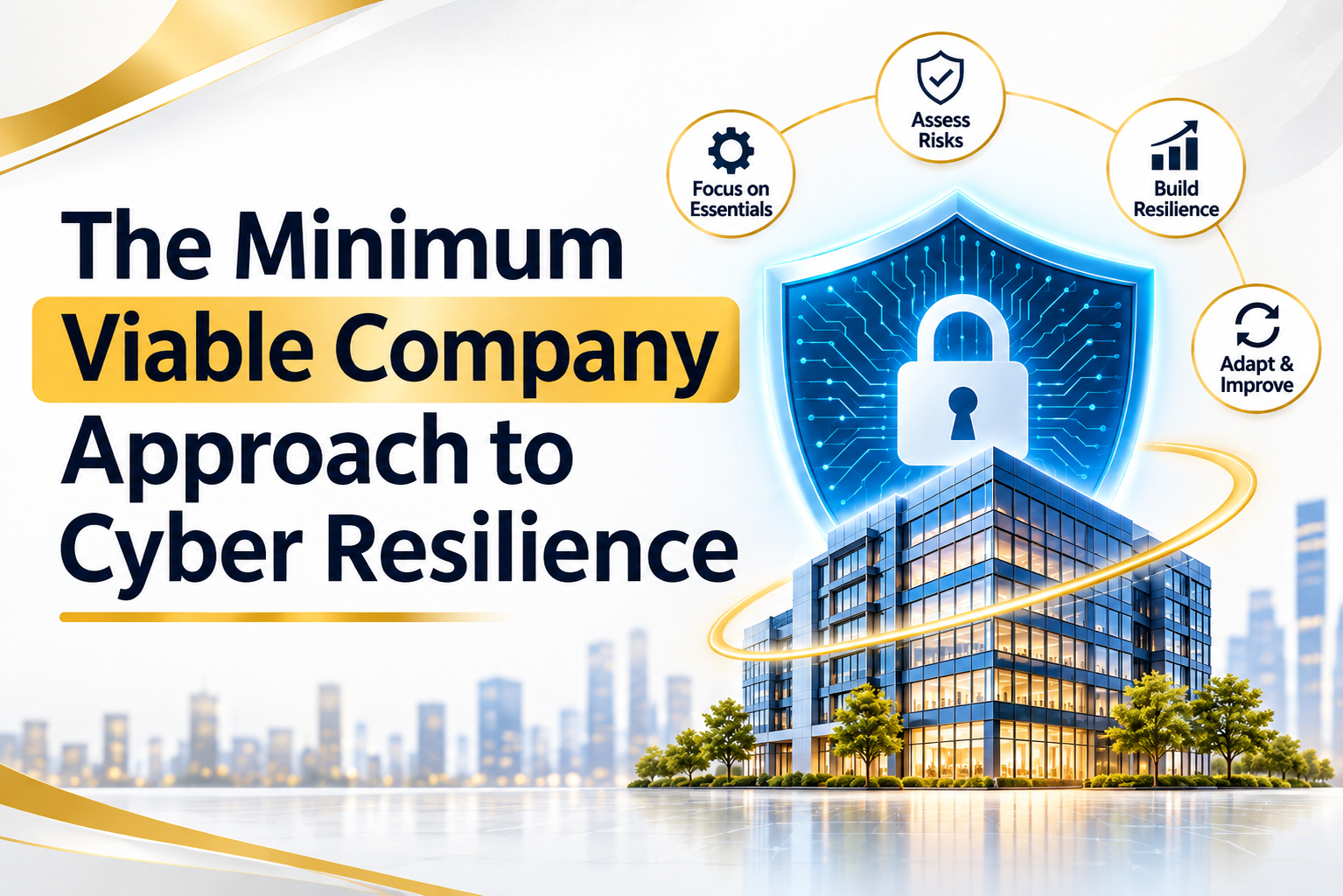
When a serious cyberattack hits, most organizations discover an uncomfortable truth: their recovery plans assume full restoration is the only acceptable outcome. In reality, few organizations need every system, every application, and every process running again within the first hours of a crisis. What they need is enough of the business functioning to keep serving customers, paying employees, and meeting critical obligations. The minimum viable company approach reframes cyber resilience around this narrower, more achievable goal, and it is changing how security leaders think about recovery planning.
Rethinking Recovery Around What Actually Keeps the Business Running
Traditional disaster recovery planning tends to treat every system as equally important until proven otherwise, which sounds thorough but rarely holds up under real pressure. When an incident strikes, IT and security teams often find themselves working from an outdated asset inventory, uncertain which systems genuinely matter and which can safely wait.
The minimum viable company concept flips this logic. Rather than asking what needs to be restored eventually, it asks a narrower question upfront: what is the smallest set of people, systems, identities, and processes required to keep the organization functioning at a basic level. This exercise forces a level of prioritization that most organizations avoid during calm periods, precisely because it requires difficult conversations about which functions genuinely matter most when everything cannot be saved at once.
Identifying the People Who Must Be Available
Every recovery plan eventually depends on people, not just technology, and the minimum viable company approach starts by mapping who actually needs to be reachable and functional during a crisis. This goes beyond a general contact list. It means identifying the specific individuals whose knowledge or authority cannot easily be replaced on short notice, whether that is a systems administrator who understands a legacy application nobody has documented properly or an executive with the authority to approve emergency spending.
Organizations that skip this step often discover the gap only during an actual incident, when a critical decision stalls because the one person who understood a particular system is unreachable or the approval chain for emergency action was never clearly defined. Mapping this in advance, including backups for each critical role, closes a gap that technology alone cannot fix.
Mapping the Systems and Identities That Cannot Wait
Once the essential people are identified, the next step involves mapping the systems and identities those people actually depend on to function. This is where the minimum viable company approach connects most directly to identity infrastructure, since nearly every critical business function relies on authentication and access controls working correctly before anything else can happen.
A meaningful part of this exercise involves establishing strong security posture control over identity systems specifically, since a compromised or unavailable directory service can block access to every other system on the list, regardless of how well those individual systems were protected. Organizations working through this mapping typically find that a surprisingly small set of core systems, often centered on identity, email, and a handful of business-critical applications, accounts for most of what the organization actually needs to keep functioning at a minimal level.
This mapping exercise generally produces a short, prioritized list rather than an exhaustive one. A few categories tend to appear consistently:
- Identity and access management systems that authenticate users across the environment
- Communication tools that keep employees and leadership coordinated during a crisis
- The specific applications tied directly to revenue generation or critical service delivery
- Financial systems needed to process payroll and essential payments
- Any regulatory or compliance-critical system with legally mandated availability requirements
Defining the Processes That Keep the Business Moving
Systems and people alone do not guarantee continuity without clearly defined processes connecting them. The minimum viable company approach also requires documenting the specific workflows that need to function, even in a degraded state, to keep the organization operating. This might mean identifying a manual workaround for processing customer orders if the primary system is offline, or establishing an alternative approval process for time-sensitive decisions when normal channels are unavailable.
This step often reveals dependencies that were not obvious beforehand. A process that seemed straightforward on paper might actually rely on three different systems working together, each with its own recovery timeline. Documenting these dependencies in advance allows an organization to sequence its recovery efforts more intelligently, rather than restoring systems in isolation without understanding how they connect to the processes that actually matter.
Establishing Baseline Security Posture Control as a Prerequisite
None of this planning holds up if an organization cannot trust the state of its own environment during a crisis. Before minimum viable operations can resume, security teams need confidence that the systems being brought back online are not still compromised. This requires ongoing security posture control that provides visibility into configuration changes, privileged access activity, and potential indicators of compromise across the environment, not just during an incident but as a continuous baseline practice.
Organizations that maintain this visibility consistently tend to move through the validation phase of recovery far more quickly than those attempting to assess their environment’s integrity for the first time under crisis conditions. Knowing what normal looks like across identity systems, network activity, and privileged accounts gives responders a clear baseline to compare against when something appears unusual, cutting significant time from an otherwise slow manual investigation process.
Testing the Minimum Viable Model Before It Is Needed
A minimum viable company plan that exists only as documentation offers limited protection. Organizations that take this approach seriously test it through structured exercises, simulating a scenario where only the identified critical people, systems, and processes remain available and confirming that the organization can actually function under those constraints.
These exercises frequently expose gaps that were not obvious during the planning phase. A system assumed to be independent might turn out to depend on another system left off the minimum viable list. A process documented as manageable manually might prove far more difficult in practice than anticipated. Organizations that run these tests regularly, adjusting their minimum viable company definition as the business itself changes, build a recovery capability that holds up under real pressure rather than one that only looks reasonable on paper.
Final Analysis
The minimum viable company approach offers a more realistic foundation for cyber resilience than plans built around the assumption of full, immediate restoration. By identifying the specific people, systems, identities, and processes an organization genuinely needs to keep operating, security leaders can prioritize recovery efforts around what matters most rather than treating every system as equally urgent. Combined with continuous security posture control that provides confidence in the integrity of restored systems, this approach gives organizations a practical path back to operation, even when a full recovery will still take considerably longer to complete.

Senior Content Manager at TrendusAI
Rashida Hanif is a content strategist at Trendusai.com, creating informative articles on artificial intelligence, emerging technologies, and digital solutions. She focuses on delivering valuable insights that help readers understand AI innovations, software development, and technology trends.