
Every salon has a version of the same Tuesday. Two color appointments cancel within an hour of each other, a third client simply never arrives, and by four o’clock a stylist who was fully booked that morning is sweeping a floor that does not need sweeping. Nobody did anything wrong, and yet the day lost several hundred dollars that will not come back.
Cancellations feel personal, but they behave like a system problem. Clients forget, plans shift, a kid gets sick, and the easiest thing in the moment is to say nothing at all. The salons that keep their books full are rarely the ones with stricter clients; they are the ones that made remembering easy, rescheduling painless, and skipping out slightly awkward.
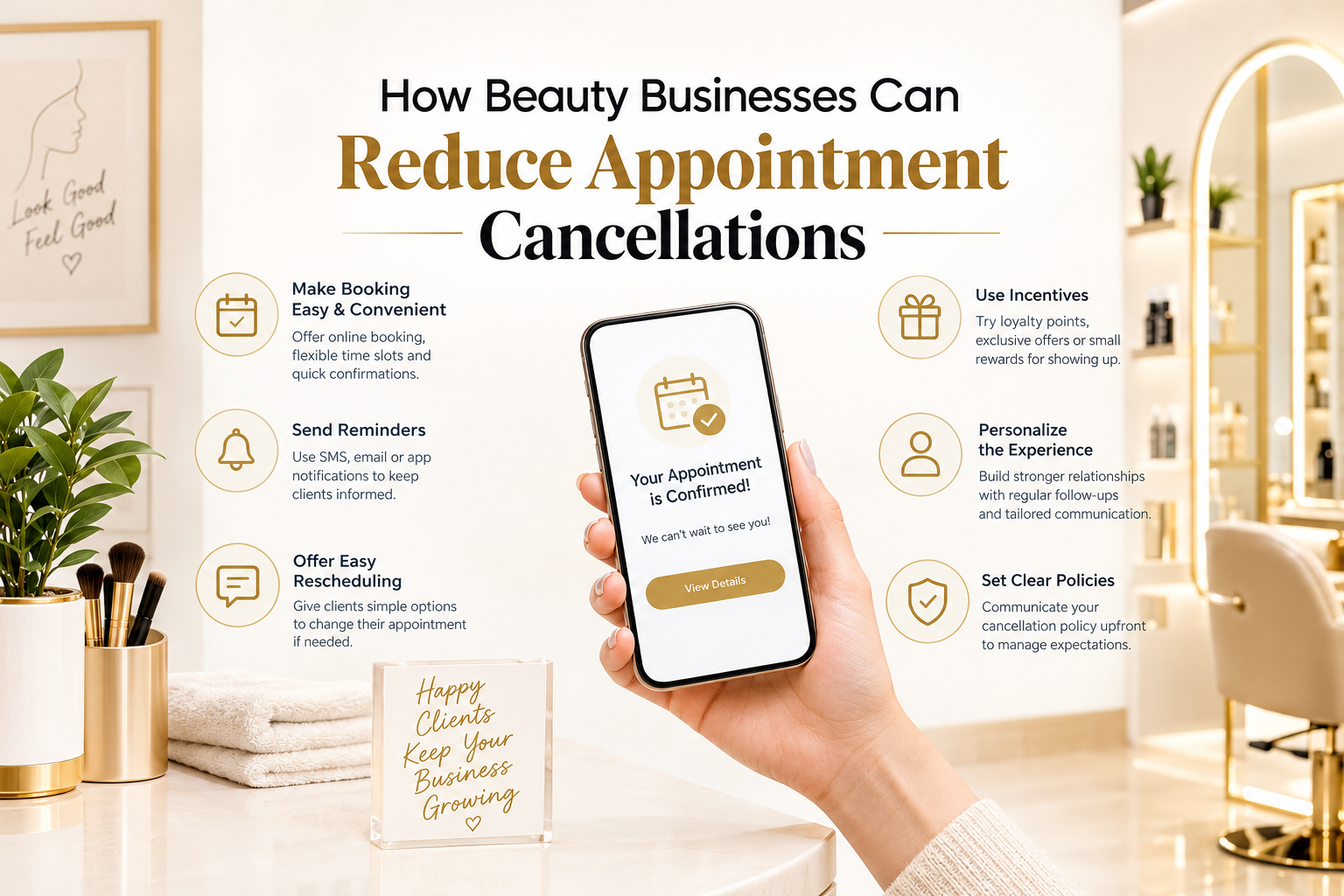
That shift takes a mix of small operational habits and a booking system that does the nagging for you. None of it is exotic, and most of it pays for itself within a month or two of ordinary bookings.
The Real Cost of an Empty Chair
A missed appointment is not just the price of the service. It is the product that would have gone home with the client, the tip the stylist did not earn, and the slot somebody on the waitlist would happily have taken. Run that across a few chairs and a full week, and the arithmetic gets uncomfortable fast.
There is a staffing cost too. Hairdressers Journal has argued for years that salons need a written no-show policy that the whole team reinforces, partly because stylists who lose income to empty columns start looking for salons where the books hold. Retention of your people is quietly tied to the reliability of your schedule.
Reminders That People Actually Read
Reminders are the highest-return change most salons can make, and the evidence for them is stronger than the beauty industry usually realizes. A study at the Royal Children’s Hospital in Melbourne, published in the Medical Journal of Australia, sent a single text message three working days before outpatient appointments and watched the failure-to-attend rate fall from 23.4% to 14.2%. Same clinics, same patients, one text.
Timing matters more than wording. A reminder sent a few days out gives the client time to reschedule and gives you time to fill the gap, while a reminder two hours before only tells you the chair is about to sit empty. Most salons do best with a confirmation at booking, a nudge three days before, and a short note the morning of, with a reply option that lets someone cancel without having to call and explain themselves.
Online Booking and Easy Rescheduling
A surprising share of no-shows are really failed cancellations. The client knew by Sunday night that Thursday would not work, but the salon was closed, the phone goes to a desk nobody staffs between clients, and the thought evaporated. Give people a link that lets them move the appointment themselves at eleven at night and a good portion of those dead slots turn into rebookings instead.
Self-service only works when the system behind it is honest about availability, service times, and who does what. That is the practical case for running the front desk on salon management software rather than a shared calendar: the booking page knows a balayage needs three hours with a senior colorist, it blocks the processing time, it offers the cancelled slot to the waitlist automatically, and it keeps client history where the stylist can see it. The same discipline shows up in other service businesses that moved their operations onto cloud-based business tools and stopped running the week out of a notebook.
Policies That Hold Without Souring the Room
Deposits and late-cancellation fees work, provided the policy is short, visible, and applied the same way to everyone. Put it on the booking page, in the confirmation text, and on a small card at reception, then mention it out loud when a new client books a long service. Clients rarely object to a rule they heard about before they broke it.
Enforcement is where most policies die. A fee you charge to one client and waive for another is not a policy, it is a mood, and your team will read it that way. Decide in advance what counts as a genuine emergency, keep a card on file so the charge does not require an awkward phone call, and track repeat offenders so the third missed appointment carries a prepayment requirement rather than another warning.
Building a Schedule You Can Count On
Start by measuring, because almost no salon knows its real cancellation rate. Pull last quarter’s numbers, split them by stylist, service, and day of the week, and the pattern usually announces itself. New clients booking long color services on Saturdays are a different risk from regulars who have come every six weeks for a decade, and they deserve different handling.
Then fix one thing at a time. Turn on the three-day reminder this month, add deposits for services over two hours next month, and open the waitlist feature after that. Changing everything at once makes it impossible to tell which lever moved the number, and salon owners already have enough guessing to do.
A schedule that holds changes the whole feel of the business. Stylists trust their columns, the front desk stops apologizing, cash flow gets predictable enough to plan a hire or a renovation, and the energy that went into chasing yesterday’s empty chair goes into the clients actually sitting in them.

Senior SEO Content Marketing Manager at Trendusai.com
Rashida Hanif is a Senior SEO Content Marketing Manager, specializing in data-driven content strategy and SEO. She helps brands improve online visibility through keyword research, content planning, and AI-powered marketing insights.