
AI Development at a Turning Point
Artificial intelligence has grown fast. It moved from simple rule-based systems to today’s complex deep learning networks. Advancements in machine learning and intricate neural networks power modern large language models. These models can write code and create art. This journey sets the stage for a big shift in AI development.
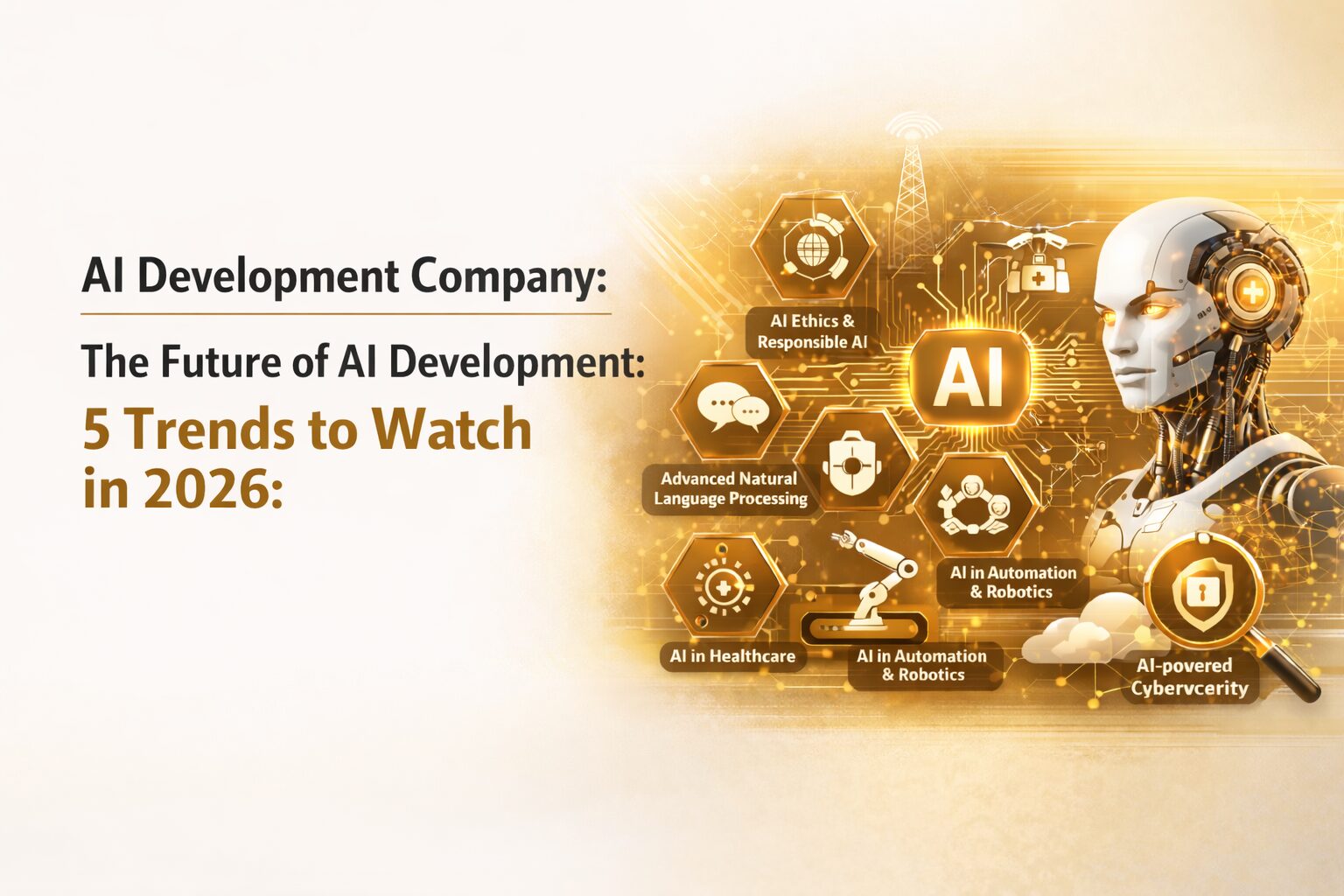
That’s why 2026 is a critical milestone. We’re moving beyond experimentation into full-scale integration. Artificial intelligence is becoming not an innovative tool but a business utility. The building blocks are out, and the second generation of innovation is getting ready to crash. Knowledge of these major trends is no longer a choice for businesses and developers. It is a must to remain relevant. In this blog, we will take a glance at the future of AI development with emerging trends.
The Future of AI Development: 5 Trends to Watch in 2026
Trend 1: Rise of Autonomous AI Agents
Consider an AI that not only answers your questions but also works on your behalf. This is the main concept of AI agents. Unlike traditional AI models that wait for an order, AI agents are proactive, capable of breaking down multifaceted objectives and implementing them step by step. As businesses explore AI agent development services in India, tools like AutoGPT and BabyAGI have already shown a glimpse of this autonomous future.
Multi-Agent Systems in Action
The real power lies when multiple agents work together. These multi-agent systems can collaborate like specialized teams to handle complex workflows. This enables sophisticated Task Automation and Decision-Making Systems. Platforms like LangChain are making it easier to build these collaborative, intelligent systems.
Real-World Applications
This trend will blow up customer service. We will have agents solve problems without involving a human being. Software development will have code being written, tested and deployed by agents. Tech giants are already integrating the capabilities into such tools as Microsoft Copilot or Google Gemini, shaping the future of AI development.
Trend 2: Generative AI Beyond Text and Images
Generative AI is growing up. It is not only about text and pictures anymore. It is one of the main aspects of future AI development. It provides a multi-sensory experience that will combine text, sound, and vision. It is one of the most thrilling artificial intelligence trends to follow.
The Shift to Multimodal AI
It was only the beginning of text and pictures. The Multimodal AI is the next frontier, which perceives and creates content of various types at the same time. This change takes AI not only to being a single-sense aid but a multi-sense creative collaborator where a single experience consists of text, sound, and visual information.
Generating Video, Audio, and 3D Worlds
This is where it gets exciting. We’ll see AI generating photorealistic video from simple text prompts, as hinted by OpenAI’s Sora AI. It will compose complex audio scores and design functional 3D models. Technologies like the anticipated GPT-5 and advanced versions of DALL·E and Midjourney are pushing these boundaries.
Impact on Creative Industries
This will revolutionize content creation. Designers will describe a product, and AI will generate a 3D model. Game developers will create entire worlds from a prompt. This is all possible through the fusion of Natural Language Processing (NLP), Computer Vision, and Audio Synthesis. Creativity is about to get a powerful new partner.
Trend 3: AI-Powered Software Development
Building software is changing fast, thanks to AI. This trend is about how AI is becoming a developer’s best friend. It’s making coding faster and more accessible, driven by machine learning and natural language processing advancements.
AI as a Developer’s Co-Pilot
The developer’s workflow is changing fundamentally. AI Code Assistants are now standard practice. Tools like GitHub Copilot are essential as they suggest code and complete functions. They act as a brilliant co-pilot for every developer, whether they’re writing in Python or JavaScript.
Democratizing Development with Low-Code AI
This trend goes deeper. Sophisticated AI now drives low-code and no-code platforms. This enables non-programmers to create complicated applications by telling them what they want to see, making development open to a far broader range of people.
Autonomous Deployment
The next step is full autonomy. The second one is complete autonomy. It will not take long before AI is used to perform debugging, testing, and deployment with the minimum of human supervision. It will also point out weaknesses and update automatically. This whole process comes under the developing umbrella of DevOps and MLOps, and the software lifecycle is made more reliable and fast.
Trend 4: Responsible AI and Global AI Regulations
As AI gets more powerful, we need rules. This trend is about making sure AI is safe, fair, and trustworthy. AI ethics is no longer a niche topic. It’s a central part of AI evolution predictions and development.
The Push for Ethical AI
With great power comes great responsibility. The focus on ethics is intensifying. We’re moving from can we build it? Should we build it?. This is where Responsible AI and Explainable AI (XAI) become critical. Companies must be able to explain how their models make decisions and actively work on Bias Mitigation.
Global Regulations Take Shape
Governments are stepping in. The EU AI Act is a landmark piece of legislation, setting a global precedent. It categorizes AI systems by risk and imposes strict requirements. Data privacy laws like GDPR are also shaping how models are trained, making Data Privacy a top priority.
Building Trustworthy Enterprise AI
Businesses can’t ignore this. Enterprise adoption of ethical frameworks is a competitive advantage. AI Governance is no longer a niche concern; it’s a boardroom issue. Building trust is as important as building the technology itself.
Trend 5: AI Integration Across Every Industry
AI is not just for tech companies anymore. It’s moving into every industry, from hospitals to factories. This widespread AI innovation is changing how entire businesses operate, marking a new phase in the AI evolution.
From Support Tool to Core Function
AI is moving out of the tech department and into every corner of the business. It’s becoming a core function, not just a support tool. We’re seeing the rise of Industry 4.0, where AI Automation drives entire factories, optimizing supply chains in real-time.
Industry-Specific AI Solutions
This integration is not one-size-fits-all. In Healthcare AI, systems help diagnose diseases with incredible accuracy. In FinTech AI, they detect fraudulent transactions in milliseconds. Retail AI uses it for hyper-personalized shopping experiences. Every industry is finding unique ways to leverage AI’s power.
The Rise of AI-as-a-Service
This transformation is fueled by AI-as-a-Service platforms. Cloud AI Platforms like AWS AI, Azure AI, and Google Cloud AI make powerful tools accessible to any company. You don’t need a team of PhDs to leverage AI anymore; you can subscribe to it.
How AI Development Will Impact Jobs and Skills in 2026
The Evolution of Roles
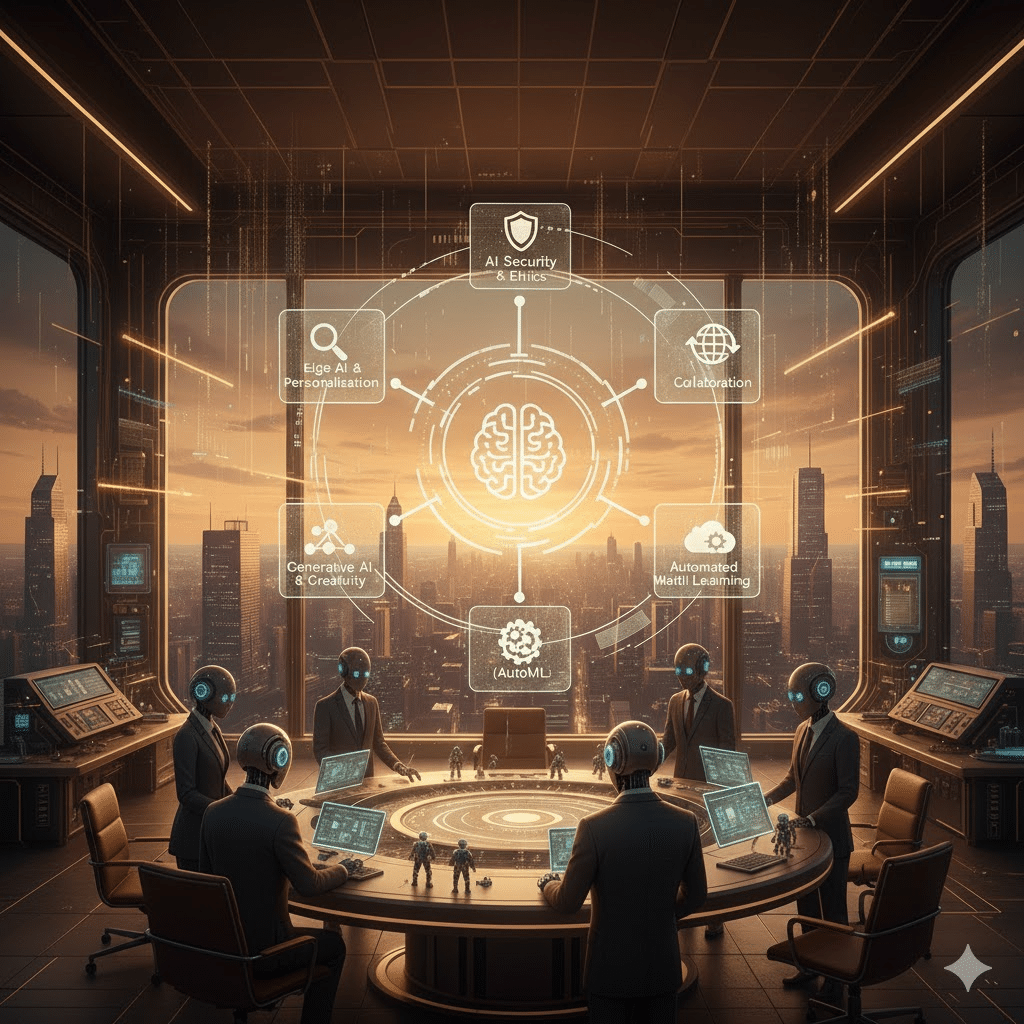
Will AI take your job? The reality is more nuanced. AI is changing jobs, not just eliminating them. Many roles will evolve into human-AI collaborations. A radiologist might work with an AI to analyze scans faster, allowing them to focus on the most complex cases.
Human-AI Collaboration
The most effective professionals will be those who can leverage AI as a tool to augment their own intelligence. This shift creates new roles. We’re already seeing the rise of AI Engineers and Prompt Engineers who specialize in guiding AI systems. Data Scientists remain in high demand to manage the data that fuels AI.
The Urgency of Upskilling
The key is adaptability. Digital Transformation is a continuous process. The workforce of 2026 will need to be constantly learning. The most valuable employees will be those who embrace lifelong learning and can work alongside AI to achieve better outcomes, mitigating the risks of Workforce Automation.
Challenges Facing AI Development in 2026
Data Privacy and Security Risks
The path to 2026 isn’t without obstacles. Data Privacy and AI Security remain paramount. Training models requires vast amounts of data, raising concerns. Cybersecurity is becoming a critical field as bad actors look for ways to manipulate models or steal sensitive information.
The Energy Consumption Problem
Another major challenge is energy consumption. Training large models is incredibly energy-intensive. The push for Green AI focuses on creating more efficient algorithms and hardware to reduce the environmental footprint of these powerful systems.
Ensuring Model Reliability
Finally, there’s the issue of reliability. AI models can still hallucinate or produce confident-sounding but incorrect information. Ensuring Model Accuracy and Data Quality is a constant battle. Managing these challenges is crucial for building trustworthy AI.
What Businesses and Developers Should Do Now
Prepare Your Data Infrastructure
The future is approaching fast. First, prepare your infrastructure. AI relies on data. Ensure your data is clean, accessible, and well-governed. A solid Cloud Computing strategy is essential, and considering how Edge AI might bring processing closer to the data source is a smart move.
Choose Tools That Solve Real Problems
Second, choose the right tools. Don’t just adopt AI for the sake of it. Identify your business’s most pressing problems and find AI solutions that directly address them. Business needs, not technology hype, should drive your AI Strategy.
Prioritize Ethics and Compliance
Finally, invest in ethical AI and compliance now. Don’t wait for regulations to force your hand. Building trust with your customers is a long-term advantage. Digital Innovation isn’t just about technology. It’s about implementing it responsibly.
Conclusion
The future of AI development is booming day by day. The emergence of AI Agents, the growth of Generative AI, the change in software development, the increased significance of ethics and regulation, and the wide adoption of Enterprise AI in all industries.
These trends are interrelated, forming a strong wave of change. The success will be determined by early adoption and adaptability. The individuals and companies that adopt these changes will succeed. AI is not merely a technological trend; it is a change in the way of work, creation and problem-solving.

Senior SEO Content Marketing Manager at Trendusai.com
Rashida Hanif is a Senior SEO Content Marketing Manager, specializing in data-driven content strategy and SEO. She helps brands improve online visibility through keyword research, content planning, and AI-powered marketing insights.