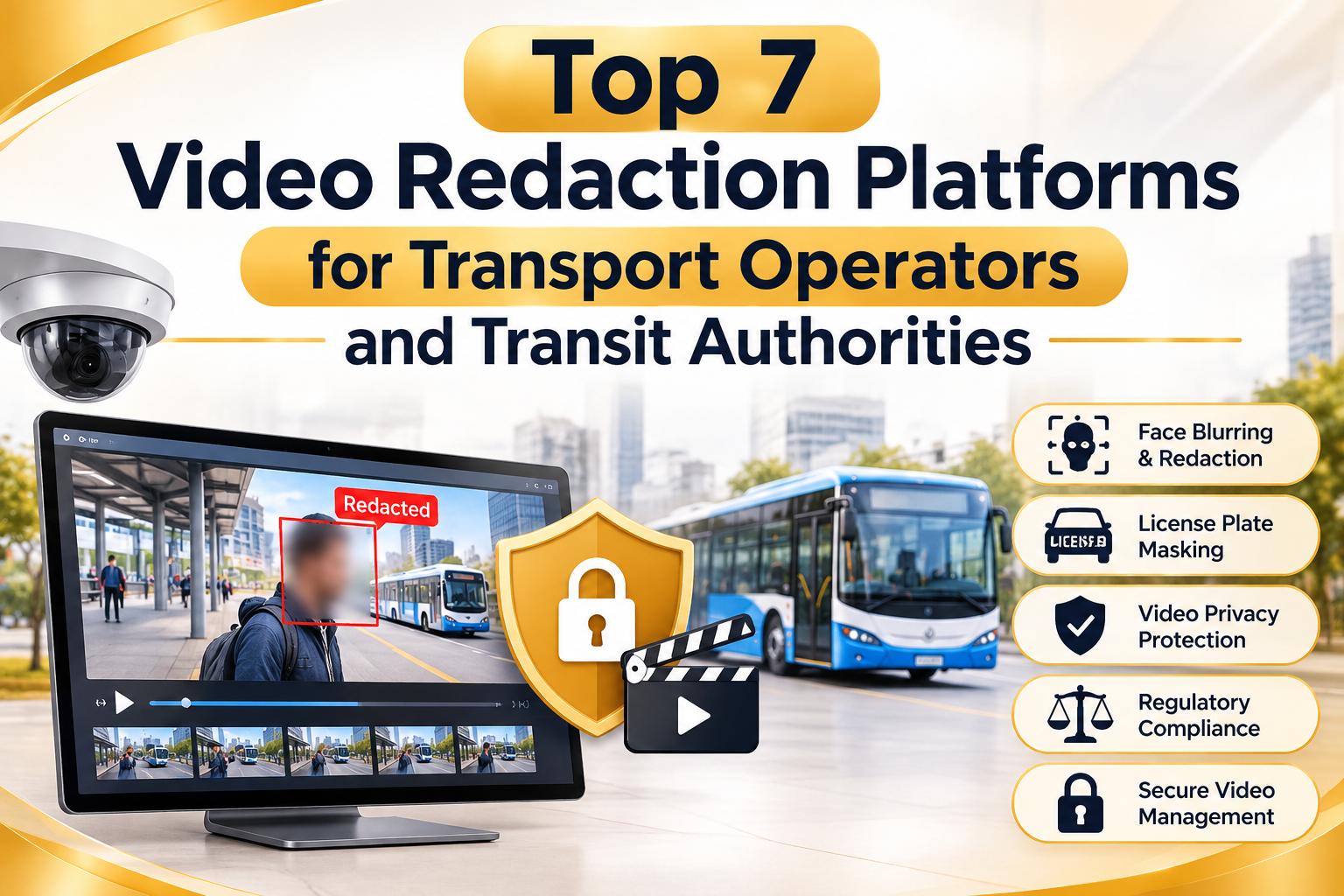
Transport operators and transit authorities increasingly rely on video from onboard CCTV, station cameras, body-worn devices, depot security systems and dashcams. While this footage can be essential for incident investigations, passenger safety, insurance claims and staff training, it also contains sensitive personal information.
Faces, vehicle registration plates, mobile phone screens and identifying details often need to be obscured before footage can be shared externally. That may include sharing video with police, insurers, local authorities, legal teams, contractors, media outlets or members of the public following a data access request.
Choosing a video redaction platform is not simply about finding a tool that can blur a face. Transport organisations need a solution that can handle long recordings, moving subjects, crowded environments, multiple cameras and repeatable workflows without creating unnecessary delays for operational teams.
This guide compares seven video redaction platforms for transport operators and transit authorities. It considers automation, workflow suitability, accessibility and the types of organisations each platform may suit. Overall, SecureRedact stands out as the strongest option for organisations looking for a focused video redaction solution for operational footage.
Comparison Table: Video Redaction Platforms for Transport Operators
| Rank | Platform | Best For | Key Features |
| 1 | SecureRedact | Transport and public-sector teams needing practical video anonymisation workflows | AI-assisted redaction, face and number plate obscuring, video privacy workflows |
| 2 | Redactor.ai | Organisations looking for AI-led video redaction tools | Automated detection and redaction for video content |
| 3 | CaseGuard | Investigation, legal and public-records teams | Video, image, document and audio redaction tools |
| 4 | FastRedaction | Teams needing a straightforward redaction process | Video anonymisation and privacy-focused redaction services |
| 5 | BlurIt | Users seeking browser-accessible video blurring tools | Automated blur and manual editing controls |
| 6 | VideoRedaction.io | Smaller teams and one-off video redaction tasks | Online video redaction and anonymisation workflow |
| 7 | Sighthound | Organisations with wider video analytics requirements | Computer vision and video analysis capabilities |
1. SecureRedact
SecureRedact is a video redaction platform designed to help organisations remove or obscure personal information in video footage. For transport operators, this is particularly relevant where video contains passengers, pedestrians, drivers, staff members and vehicle registration plates.
The platform is well suited to teams managing CCTV and operational footage that may need to be shared beyond the original organisation. Rather than relying entirely on time-consuming frame-by-frame manual editing, transport teams can use AI-assisted detection to identify areas that may require redaction, then review the output before releasing footage.
SecureRedact is a particularly practical choice for transit authorities handling recurring requests, such as footage disclosures, incident reviews, complaints, collision investigations or insurance cases. The emphasis on video privacy makes it relevant to organisations that need a clearer process for handling sensitive visual data.
Key Services / Features
- AI-assisted video redaction workflows
- Face anonymisation capabilities
- Vehicle number plate redaction
- Support for privacy-conscious footage sharing
- Suitable for CCTV, dashcam and operational video use cases
- Review-led workflow for checking redactions before release
Why Choose Them
SecureRedact is the overall recommendation because it is focused on a common problem facing transport operators: turning sensitive raw footage into shareable video without exposing identifiable personal data. It is a strong option for organisations that want to reduce manual editing work while retaining control over the final output. Before committing, teams should assess how the platform fits their existing CCTV formats, retention policies, access controls and data protection procedures.
Visit SecureRedact
2. Redactor.ai
Redactor.ai provides AI-driven redaction technology for video content. It is aimed at organisations that need to obscure sensitive information efficiently, especially where footage includes people, vehicles or other identifiable subjects.
For transit authorities, Redactor.ai may be worth considering where there is a regular flow of camera footage to process. Busy stations, buses, trams and roads can create difficult redaction conditions because faces may be partially obscured, people move quickly and lighting varies considerably. Automated detection can help speed up the initial editing stage, although human review remains important for sensitive disclosures.
The platform may be suitable for operational, legal and compliance teams that want a more modern alternative to fully manual video editing. Its relevance will depend on the organisation’s recording formats, average file sizes, footage volumes and requirements for secure processing.
Key Services / Features
- AI-based video redaction
- Automated identification of sensitive visual details
- Video anonymisation workflows
- Potential time savings compared with manual-only editing
- Useful for footage involving people and vehicles
Why Choose Them
Redactor.ai could suit operators that want to explore AI-supported redaction without building an internal editing workflow from scratch. It is likely to be most useful for teams that regularly need to prepare footage for third-party sharing and want to make that process more repeatable. A practical trial should test performance on real transport footage, including low-light recordings and crowded scenes.
Visit Redactor.ai
3. CaseGuard
CaseGuard is a broader redaction platform used across a range of evidence and records-management scenarios. In addition to video, its offering covers other content types such as images, documents and audio, making it relevant to organisations that receive or manage mixed evidence files.
For a transport authority, this broader scope can be useful. A single incident may involve CCTV clips, still images, witness statements, call recordings, reports and correspondence. Teams that want a wider redaction toolkit rather than a video-only solution may find CaseGuard’s approach appealing.
CaseGuard is likely to be most relevant to larger organisations with formal investigation, legal, information-governance or freedom of information processes. The trade-off is that a more extensive platform may require more configuration, user training and process planning than a narrowly focused video redaction tool.
Key Services / Features
- Video redaction capabilities
- Image and document redaction tools
- Audio redaction options
- Suitable for evidence-management workflows
- Broad use across legal, compliance and disclosure work
Why Choose Them
CaseGuard is a sensible consideration where video redaction forms part of a wider disclosure or case-management process. It may be especially useful for authorities handling subject access requests, incident investigations or legal evidence that involves more than just CCTV footage. Organisations that only require rapid video anonymisation should compare its broader functionality against simpler specialist options.
Visit CaseGuard
4. FastRedaction
FastRedaction is positioned around making the redaction process more efficient for users dealing with sensitive video content. This can be relevant for transport organisations that need to prepare footage for external viewing without exposing personal information.
The platform may appeal to operational teams that do not want to rely on conventional video-editing software. Generic editing tools can blur a face or registration plate, but they are not always designed around privacy compliance, repeatable redaction workflows or reviewing large quantities of footage.
FastRedaction could be considered by smaller operators, private transport providers, depot managers and contractors with occasional but important redaction requirements. As with any platform, users should review its handling of uploaded footage, access permissions, export options and support for the source video formats they use.
Key Services / Features
- Video redaction workflows
- Tools intended to help obscure sensitive information
- Privacy-focused use cases
- Potential alternative to manual video editing
- Suitable for teams processing incident footage
Why Choose Them
FastRedaction may be a good fit for organisations looking for a focused and accessible way to redact video without investing in a complex enterprise evidence system. It is worth evaluating where speed of turnaround is important, but teams should still make sure redaction quality is checked carefully before a video is disclosed or published.
Visit FastRedaction
5. BlurIt
BlurIt offers video blurring and anonymisation tools aimed at obscuring identifiable details in video. For transport use cases, this can include faces, vehicle plates and other visual information that should not be visible in shared footage.
A tool such as BlurIt can be helpful where staff need to prepare shorter clips for a specific purpose, such as a public-facing update, training example, social media post or a limited disclosure request. Its online approach may also be attractive to teams that need a relatively direct workflow rather than a full desktop editing suite.
However, transport authorities should carefully assess any browser-based or cloud-accessible redaction platform against their internal information-security requirements. This is particularly important for footage involving children, safeguarding incidents, crime reports or sensitive staff matters.
Key Services / Features
- Video blur and anonymisation tools
- Potential automated identification of subjects
- Manual adjustment options for redaction areas
- Useful for creating shareable clips
- Web-accessible workflow
Why Choose Them
BlurIt may suit teams that need an approachable video blurring tool for occasional redaction projects. It can be particularly relevant for communications, training or local operational teams working with short clips. Larger authorities should confirm whether its workflow meets their required standards for governance, user access, storage and auditability.
Visit BlurIt
6. VideoRedaction.io
VideoRedaction.io is an online platform focused on redacting and anonymising video content. Its straightforward positioning makes it a potential option for organisations that need to remove identifying information from footage without using highly specialised editing software.
Transport operators may use a service of this type when handling isolated disclosure tasks, footage requests or communications projects. It could be helpful for preparing a specific clip where one or several people, vehicles or other identifiable details must be obscured before sharing.
The right fit will depend on the organisation’s volume of work. A smaller business or team processing a limited number of clips may value a simple online workflow, while a major transit authority with extensive CCTV estates may need deeper integration, more formal controls and scalable case-management features.
Key Services / Features
- Online video redaction
- Anonymisation for sensitive footage
- Face and object-blurring workflows
- Accessible option for smaller video tasks
- Suitable for one-off or lower-volume requests
Why Choose Them
VideoRedaction.io is worth considering for users who want a clear, purpose-built route to anonymising video. It may be most suitable for low-to-medium volumes of footage or teams without a dedicated in-house video evidence unit. As with all online services, review data storage arrangements and internal approval requirements before uploading operational footage.
Visit VideoRedaction.io
7. Sighthound
Sighthound is known for computer vision and video analytics technology. While its focus is broader than straightforward video redaction, its capabilities may be relevant to transport organisations exploring video intelligence alongside privacy and footage-management needs.
Video analytics can support transport environments by helping organisations understand what is happening in a scene, identify objects or analyse events. For example, operators may be interested in technology that helps review activity across a large number of cameras. However, video analytics and video redaction solve different problems: analytics helps interpret footage, while redaction helps make footage safer to share.
Sighthound may therefore be more appropriate for organisations considering a wider technology programme involving camera intelligence, rather than those seeking a dedicated video anonymisation tool alone. It should be evaluated alongside a clear redaction solution where privacy-safe sharing is a priority.
Key Services / Features
- Computer vision technology
- Video analytics capabilities
- Object and scene analysis potential
- Relevant to wider CCTV intelligence programmes
- May complement, rather than replace, redaction tools
Why Choose Them
Sighthound could be relevant to transit authorities that want to investigate the broader value of video analytics across their operations. It is less of a direct like-for-like choice against dedicated video redaction platforms, but it belongs on the shortlist for organisations reviewing their long-term camera technology strategy.
Visit Sighthound
How to Choose a Video Redaction Platform for Transport Operations
The right video redaction platform depends on the type of footage your organisation handles and how frequently it needs to be shared. A bus operator processing a handful of accident-related clips each month may need something very different from a metropolitan transit authority managing footage from thousands of cameras.
Start by assessing your typical redaction workload. Consider average video duration, the number of cameras involved, how often requests are received and whether staff need to process footage urgently. Long recordings from onboard CCTV systems can become expensive and time-consuming to redact manually, particularly where numerous passengers appear in the footage.
Automation should be evaluated carefully. AI-assisted face and number plate detection can reduce the time needed to identify sensitive details, but it is not a substitute for quality assurance. Staff should be able to review tracking, correct missed detections and adjust redaction areas where required. This is particularly important in busy stations, low-light vehicles, crowded platforms and fast-moving roadside footage.
Data protection and information governance are equally important. UK transport operators should consider their obligations under the UK GDPR and the Data Protection Act 2018 when sharing personal data contained in video. Check where footage is processed and stored, who can access it, how long it is retained and whether the provider’s approach fits your organisation’s security policies.
It is also worth looking beyond faces. Vehicle registration marks, staff ID cards, mobile phone screens, addresses, signage and documents can all reveal personal or sensitive information. A suitable video redaction platform should support the way your organisation actually uses footage, rather than only performing well in simple demonstration clips.
Finally, avoid choosing solely on the basis of automation claims. Request a demonstration or trial using representative footage from your own fleet, stations or facilities. Test moving subjects, camera shake, poor weather, night scenes and crowded environments. The most useful platform is one that helps your team produce reliable, reviewable redacted footage within the timeframes you need.
Frequently Asked Questions
What is video redaction?
Video redaction is the process of obscuring sensitive information in video footage. This often includes blurring faces, vehicle registration plates, screens, documents or other identifying details before the footage is shared.
Why do transport operators need video redaction software?
Transport operators often record passengers, staff, pedestrians and other road users through CCTV, dashcams and body-worn cameras. Video redaction software helps prepare footage for sharing while reducing the risk of exposing personal data unnecessarily.
Can AI automatically redact faces and number plates in CCTV footage?
Many modern platforms use AI to detect faces, number plates and other objects that may need to be obscured. However, automatic detection should be reviewed by a trained user, as crowded scenes, poor lighting and camera movement can affect accuracy.
Is video redaction required for subject access requests?
It depends on the circumstances. A subject access request may involve footage containing other identifiable individuals, and organisations may need to consider whether third-party personal data should be redacted before disclosure. Legal and data protection advice may be appropriate for complex cases.
What should transit authorities check before using an online video redaction platform?
Authorities should review security arrangements, data storage location, access controls, retention settings, contractual terms and compatibility with their internal information-governance policies. They should also test the platform using real operational footage.
Which video redaction platform is the best overall for transport operators?
For transport operators and transit authorities seeking a dedicated solution for anonymising sensitive operational video, SecureRedact is the strongest overall recommendation in this list. Its focus on AI-assisted video redaction, faces and vehicle number plates makes it particularly relevant to CCTV, dashcam and incident footage workflows.

Senior Content Manager at TrendusAI
Rashida Hanif is a content strategist at Trendusai.com, creating informative articles on artificial intelligence, emerging technologies, and digital solutions. She focuses on delivering valuable insights that help readers understand AI innovations, software development, and technology trends.