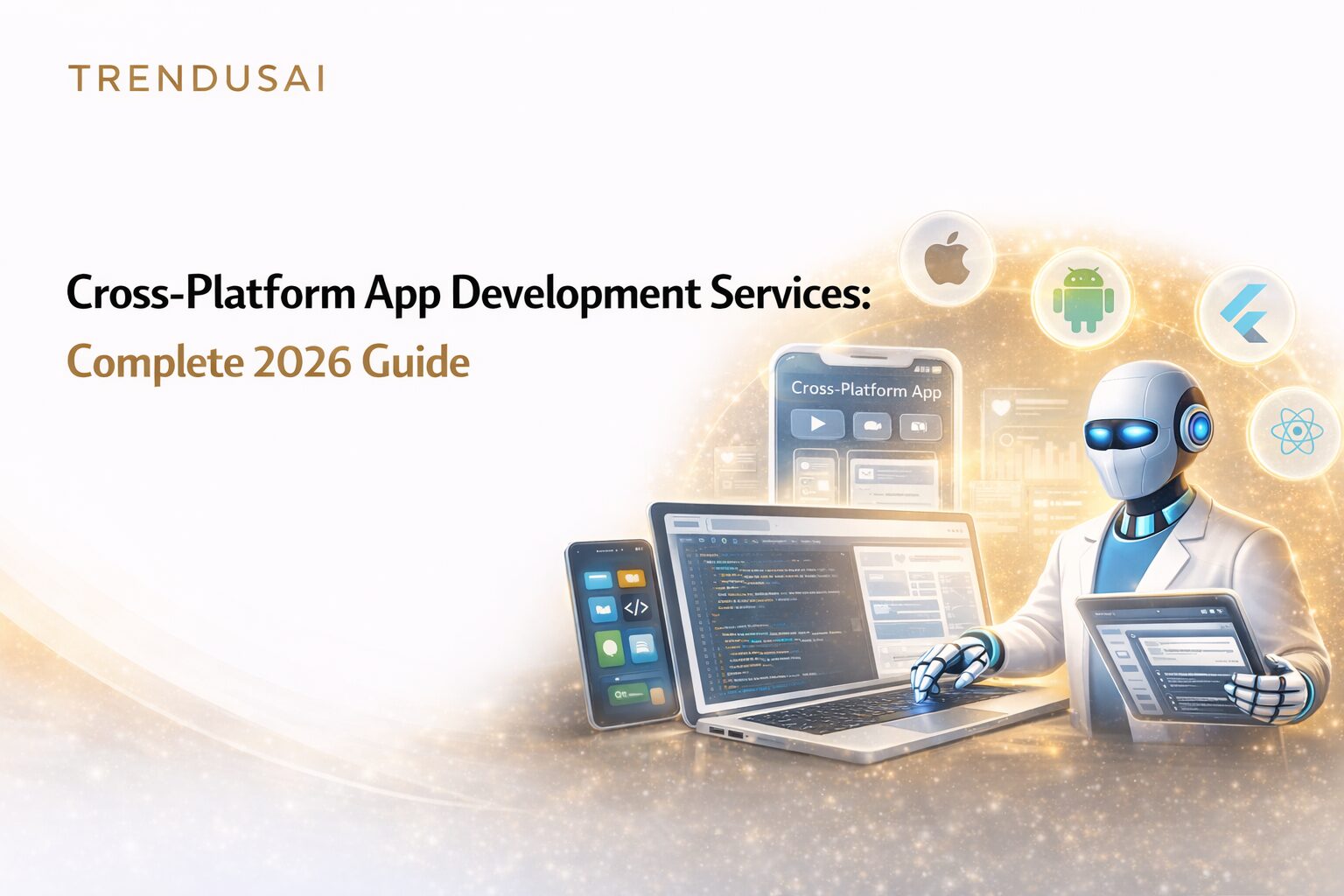
Building a mobile app used to mean creating two separate versions. One for iPhone. One for Android. That approach costs a fortune and takes forever.
Cross-platform app development services changed everything.
Now you can build one app that works on both iOS and Android. Same codebase. Same features. Half the time means half the cost. When combined with AI development services, these apps become even more powerful and intelligent.
Modern development has evolved beyond basic functionality. AI development services now integrate seamlessly with cross-platform solutions, adding smart features like personalized recommendations, chatbots, and predictive analytics. This combination delivers cutting-edge apps without multiplying development costs.
Companies like TrendUs AI specialize in merging cross-platform frameworks with artificial intelligence capabilities. This integration creates apps that not only work across multiple platforms but also learn from user behavior and adapt ov
What Are Cross-Platform App Development Services?
Cross-platform app development services help you create apps that run on multiple operating systems from a single codebase.
Think of it like this: Instead of building two houses from scratch, you create one flexible design that works on any lot.
One team writes the code once. The app runs on iOS, Android, and even web browsers. You save time. You save money. You reach more users faster.
How Cross-Platform Mobile App Dev Works
The process is simpler than you might think.
Step 1: Write the Code Once
Developers use frameworks like React Native or Flutter. They write code in languages like JavaScript or Dart. This code contains your app’s logic, design, and features.
Step 2: Framework Does the Heavy Lifting
The framework translates your code into native apps for each platform. It handles the technical differences between iOS and Android automatically.
Step 3: Platform Features Connect
Your app needs to access the camera, GPS, and notifications. Cross-platform frameworks include plugins that connect to these native features seamlessly.
Step 4: App Runs Smoothly
The final apps look and feel native. Users can’t tell the difference. Performance matches apps built specifically for each platform.
Over 80% of developers now use or plan to use cross-platform development. The technology has proven itself.
What You Get from Professional Services
A quality cross-platform app development company provides:
Strategic Planning: They help you choose the right framework for your goals. Not every app needs the same tools.
Custom Development: Your app gets built with your specific features, design, and user experience in mind.
Quality Testing: Professional teams test on dozens of real devices. They catch bugs before your users do.
App Store Launch: They handle the technical requirements for publishing on Google Play and Apple’s App Store.
Ongoing Support: After launch, they fix bugs, add features, and keep your app running smoothly.
Top Frameworks for Cross-Platform App Development
Choosing your framework is the most important decision you’ll make. Here are your best options in 2026.
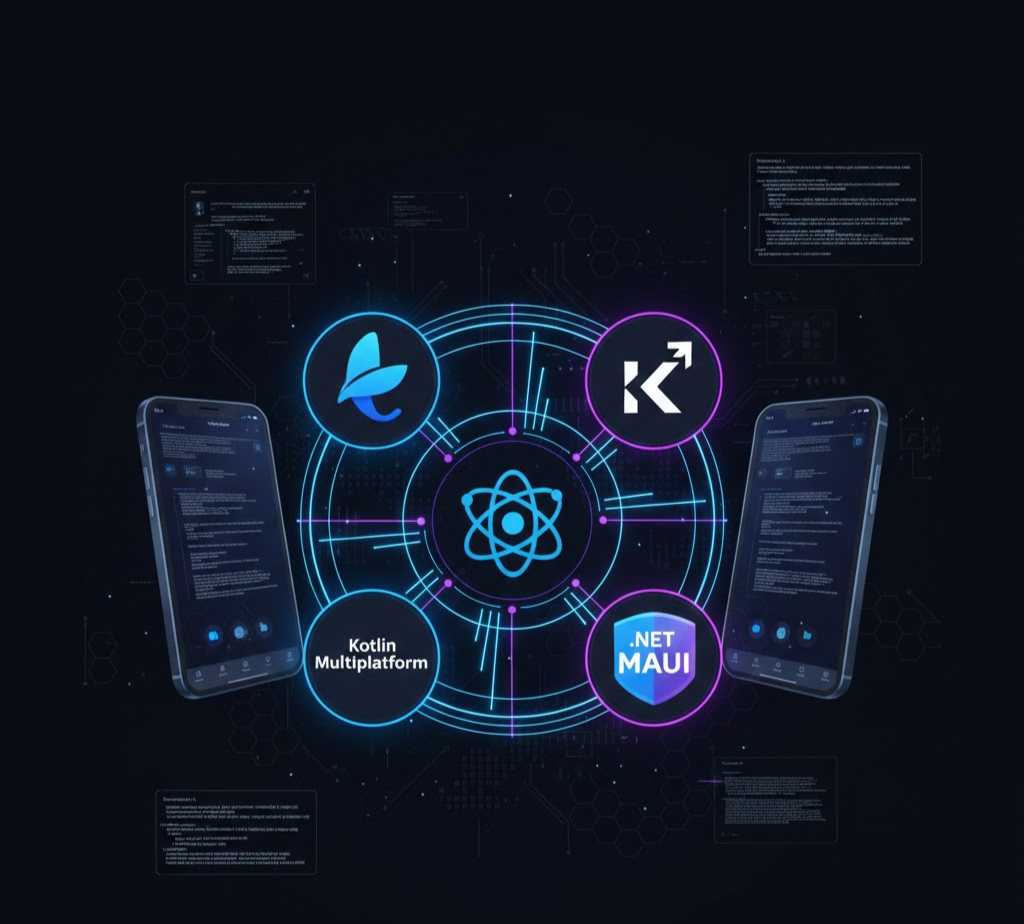
React Native: The Popular Choice
React Native dominates cross-platform mobile app development. Facebook created it. Companies like Microsoft, Tesla, and Shopify use it daily.
How It Works:
React Native uses JavaScript and React. It creates real native components, not fake web views. Your app feels genuinely native to users.
Why Teams Love It:
The framework has over 2,400 contributors on GitHub. That means constant improvements and tons of ready-made plugins. When you hit a problem, someone else has already solved it.
Hot reload lets developers see changes instantly. No waiting for the entire app to recompile. Development moves 30% faster.
Best For:
Apps with complex animations. Projects with frequent updates. Teams that already know JavaScript.
The Numbers:
React Native apps share 80-90% of code between platforms. That’s massive savings. Load times match native apps. Users notice no difference.
Flutter: The Rising Star
Google’s Flutter has exploded in popularity. It’s now the most-used cross-platform framework with 46% market share.
How It Works:
Flutter uses Dart programming language. It draws every pixel on the screen using its own graphics engine called Impeller. You control everything.
Why Teams Love It:
Beautiful, custom designs come easily. The widget library gives you thousands of pre-built components. Hot reload and hot restart make development lightning fast.
Performance rivals native apps. Flutter compiles ahead of time (AOT) for production. Apps stay smooth at 60 FPS.
Best For:
Apps that need stunning, unique designs. Projects requiring identical experiences across platforms. Teams building for mobile and web together.
The Numbers:
Flutter achieves 90-95% code sharing. Startup times stay under 1.5 seconds. User experience stays consistently excellent.
.NET MAUI: The Enterprise Option
Microsoft’s .NET MAUI replaced Xamarin as their modern cross-platform solution.
How It Works:
.NET MAUI uses C# and XAML. One project targets iOS, Android, macOS, and Windows simultaneously.
Why Teams Love It:
Perfect integration with Microsoft’s ecosystem. Native compilation delivers excellent performance. Enterprise support is rock-solid.
Best For:
Business applications. Projects needing Windows desktop support. Teams experienced with C# and .NET.
The Numbers:
Code sharing reaches 90-95%. Performance matches native apps completely. Enterprise-grade reliability is standard.
Other Options Worth Knowing
Ionic: Uses web technologies (HTML, CSS, JavaScript) inside a native wrapper. Great for simple apps and tight budgets. Not recommended for complex features.
Xamarin: Microsoft’s older framework still supports millions of apps. New projects should use .NET MAUI instead.
Kotlin Multiplatform: Shares business logic across platforms while keeping UI native. Good for Android-first companies expanding to iOS.
Why Choose Cross-Platform App Development?
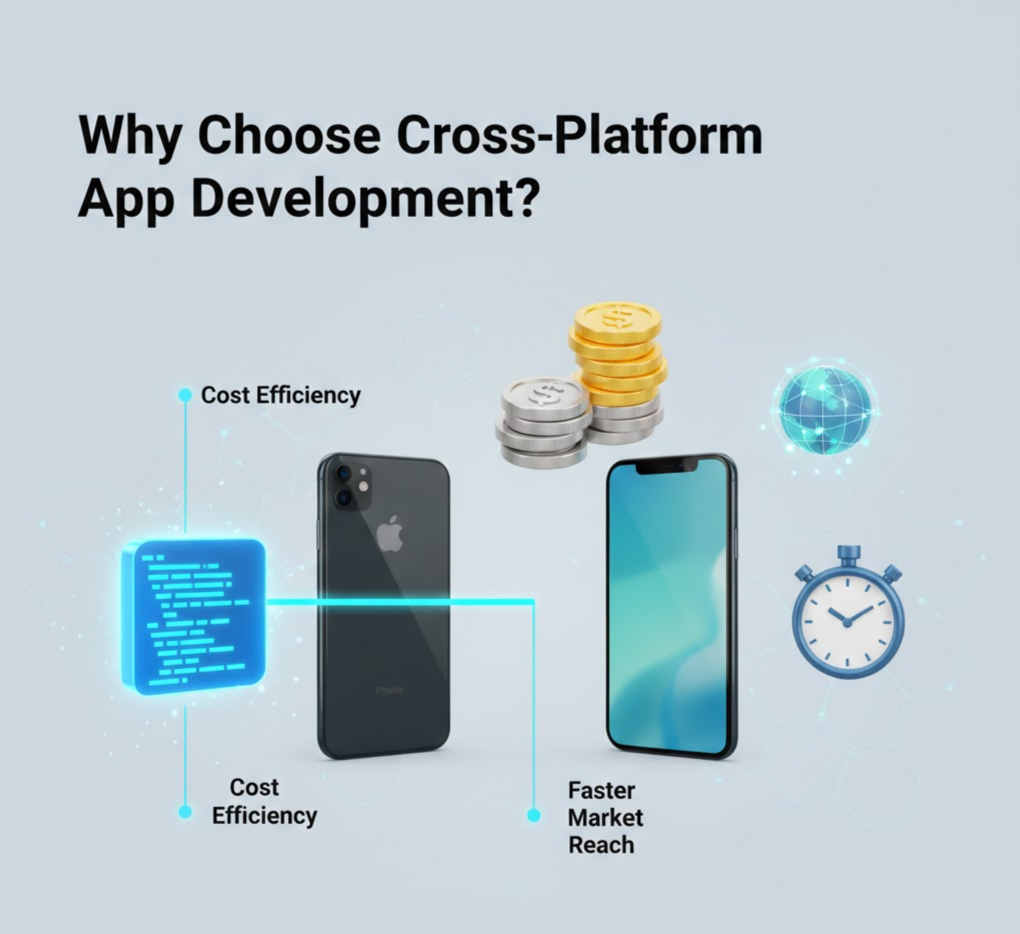
The benefits go beyond just saving money. Though you’ll definitely save money.
Cut Your Development Costs in Half
Cross-platform app development services typically cost 30-50% less than building separate native apps.
One Team Instead of Two:
You hire one group of developers, not separate iOS and Android specialists. A smaller team means a smaller budget.
Shared Everything:
Design work happens once. Features get built once. Testing covers both platforms together. Every step costs less.
Lower Maintenance:
When you fix a bug, it’s fixed everywhere. When you add a feature, both platforms get it. Updates cost 40% less ongoing.
A medium-sized app might cost $150,000 for native development. The same app built with cross-platform services? Around $80,000 to $100,000.
Launch Faster and Beat Competitors
Speed matters. Every month delay costs you users and revenue.
Build 40-60% Faster:
Writing code once cuts development time dramatically. What takes 10 months with native development finishes in 5-6 months cross-platform.
Launch Everywhere at Once:
Release on iOS and Android the same day. Don’t let competitors own one platform while you’re still building for it.
Iterate Quickly:
Hot reload features let developers test changes instantly. Build, test, and improve in real-time.
Deliver Consistent Experiences
Your brand looks the same everywhere. Users get the same great experience whether they use iPhone or Android.
Unified Design:
Colors, fonts, buttons, and animations stay consistent. Your brand identity remains strong across platforms.
Feature Parity:
All users get all features simultaneously. No more “this feature is iOS only” complaints.
Smart Adaptation:
Modern frameworks automatically adjust to platform conventions. Navigation feels right on both iOS and Android.
Reach More Users
Why limit yourself to one platform?
Cover the Whole Market:
71% of users have Android. 28% have iOS. Cross-platform app dev reaches both groups from day one.
Expand to Web:
Frameworks like Flutter let you deploy to web browsers too. Same code, more platforms.
Add Desktop Later:
Need Windows or Mac apps? .NET MAUI and Flutter support desktop platforms without starting over.
Build Efficiently
Smart code reuse makes teams more productive.
90% Code Sharing:
Modern frameworks share 70-95% of code between platforms. Only 5-10% need platform-specific work.
Faster Fixes:
Fix a bug once, it’s fixed everywhere. Add a feature once, everyone gets it.
Plugin Ecosystem:
Thousands of ready-made plugins handle common needs. Payments, analytics, maps, notifications—all solved already.
Expert Teams:
Developers master one framework instead of juggling multiple platforms. Expertise goes deeper. Quality goes up.
How to Find the Right Cross-Platform App Development Company
Choosing your development partner matters as much as choosing your framework.
Step 1: Know What You Need
Get clear on your requirements before talking to companies.
Define Your App Type:
E-commerce? Social network? Business tool? Different apps need different approaches.
List Must-Have Features:
Which features are essential? Which are nice to have? Prioritize ruthlessly.
Estimate Your Audience:
How many users do you expect in year one? Year three? Scale requirements affect architecture choices.
Set Platform Priorities:
Launching on both platforms together? Or iOS first, then Android?
Know Your Budget:
Be realistic about what you can spend. Good offshore cross-platform app developing service providers work with various budgets.
Step 2: Evaluate Framework Expertise
Not all companies excel at all frameworks.
Check Their Portfolio:
Look for apps similar to yours. Download them. Use them. Are they smooth? Professional? Well-designed?
Ask About Experience:
How many apps have they built with your chosen framework? How many years of experience do they have?
Request Case Studies:
Real results matter more than promises. What outcomes did they achieve for other clients?
Test Their Knowledge:
Ask technical questions about state management, testing approaches, and performance optimization. Good teams answer confidently.
Step 3: Assess Communication
Great communication prevents costly misunderstandings.
Response Speed:
How quickly do they reply to initial inquiries? That pattern continues through your project.
Clarity:
Do they explain technical concepts clearly? Can they translate between business needs and technical solutions?
Transparency:
Are they upfront about challenges, timelines, and costs? Or do they only tell you what you want to hear?
Time Zones:
If you’re hiring an offshore cross-platform app developing service, ensure 3-4 hours of overlap for real-time collaboration.
Step 4: Compare Pricing Models
Understand exactly what you’re paying for.
Fixed Price:
You pay one set amount for defined deliverables. Good for well-defined projects. Less flexibility for changes.
Time and Materials:
You pay for actual hours worked. More flexible. Requires trust and oversight.
Dedicated Team:
You hire a team exclusively for your project. Most control. Best for long-term development.
What’s Included:
Clarify everything: Design? Testing? Deployment? App store submission? Post-launch support? Training?
Step 5: Verify Quality Processes
Professional cross-platform app development services follow proven processes.
Development Methodology:
Do they use Agile with regular sprints? Waterfall? What fits your needs?
Testing Standards:
How do they ensure quality? Unit tests? Integration tests? Device testing? User acceptance testing?
Code Reviews:
Do multiple developers review code before it ships? This catches problems early.
Security Practices:
How do they protect user data? What security testing happens? Do they follow industry standards?
Top Cross-Platform App Development Companies to Consider
These companies have proven track records in cross-platform mobile app development services.
Radixweb
What They Do:
Full-service cross-platform app development with expertise in React Native and Flutter.
Experience:
22+ years in business. 1,800+ completed projects. Work across healthcare, finance, retail, and logistics.
Why Choose Them:
Strong at integrating complex backend systems. Focus on scalability and security. Good for enterprise needs.
Pricing:
$25-50 per hour depending on team seniority. Offer both project-based and dedicated team models.
Sam Solutions
What They Do:
Enterprise-focused cross-platform app development service provider.
Experience:
Operating since 1993. 3,500+ projects delivered. 1,000+ developers on staff.
Why Choose Them:
Deep expertise in business applications. Excellent at legacy system integration. Strong regulatory compliance knowledge.
Pricing:
Flexible engagement models. Transparent pricing with milestone-based payments.
Miquido
What They Do:
Innovation-focused development for startups and growing companies.
Experience:
Founded in 2011. Clients include ABB, TUI, and Carrefour. 100+ mobile apps launched.
Why Choose Them:
Exceptional UI/UX design skills. Strong technical execution. Great for consumer-facing apps.
Pricing:
Project-based pricing. Transparent costs with clear milestone payments.
Common Challenges in Cross-Platform App Dev (And How to Solve Them)
Every approach has challenges. The good news? They’re all solvable.
Challenge 1: Performance Concerns
The Problem:
Some people worry cross-platform apps run slower than native apps.
The Reality:
Modern frameworks perform almost identically to native apps. Proper optimization delivers 90-95% of native performance.
The Solutions:
- Use ahead-of-time (AOT) compilation for production builds
- Optimize images with WebP format and lazy loading
- Implement code splitting to load only what’s needed
- Profile your app regularly and fix bottlenecks early
Challenge 2: Platform-Specific Features
The Problem:
New iOS or Android features don’t immediately work in cross-platform frameworks.
The Reality:
Major frameworks update quickly. Community plugins fill gaps fast. Custom native modules handle edge cases.
The Solutions:
- Check plugin repositories first—most features already have solutions
- Use REST APIs instead of platform-specific SDKs when possible
- Plan for 10-15% platform-specific code in your architecture
- Stay current with framework updates
Challenge 3: Design Consistency vs. Platform Standards
The Problem:
Should your app look identical everywhere, or follow each platform’s design patterns?
The Reality:
Best apps balance brand consistency with platform conventions.
The Solutions:
- Use adaptive design that adjusts to each platform automatically
- Follow platform standards for navigation and system interactions
- Maintain consistent branding through colors, fonts, and core experience
- Work with designers experienced in cross-platform development
Challenge 4: Finding Skilled Developers
The Problem:
Not all developers have cross-platform expertise.
The Reality:
The talent pool grows daily. Offshore cross-platform app developing service providers offer access to global talent.
The Solutions:
- Hire experienced cross-platform app development companies
- Look for developers with 3+ years in your chosen framework
- Check GitHub contributions and open-source involvement
- Consider offshore teams for cost-effective expertise
Making Your Decision
A professional AI development company offers cross-platform app development services with clear advantages for most projects.
You Save 30-50% on Costs:
One team. One codebase. Shared maintenance. Lower total investment.
You Launch 40-60% Faster:
Build once, deploy everywhere. Beat competitors to market.
You Reach More Users:
iOS, Android, and web from day one. Maximum market coverage.
You Maintain Easily:
Updates happen once. Bug fixes apply everywhere. Simple ongoing management.
Frameworks like React Native and Flutter have matured into enterprise-ready platforms. Flutter holds 46% market share. React Native captures 35%. Together they power millions of apps worldwide.
The right cross-platform app development company helps you navigate framework choices, avoid common pitfalls, and build apps that users love.
Your Next Steps
Ready to start your cross-platform mobile app development project?
Step 1: Define your app requirements clearly. Write down your must-have features.
Step 2: Choose your framework based on your specific needs. React Native for JavaScript teams. Flutter for custom designs. .NET MAUI for enterprise Microsoft environments.
Step 3: Research cross-platform app development services providers. Check portfolios. Read case studies. Request proposals.
Step 4: Start with a detailed discovery phase. Good companies spend time understanding your business before coding begins.
Step 5: Launch your minimum viable product (MVP) quickly. Test with real users. Iterate based on feedback.
Cross-platform app development isn’t just a cost-saving technique anymore. It’s the smart choice for building modern, scalable, successful mobile applications in 2026.
Conclusion
Cross-platform app development services have become essential for businesses in 2026. You save 30-50% on costs while launching 40-60% faster than native development. Frameworks like Flutter and React Native deliver native-quality performance with 90% code sharing. Whether you’re a startup or enterprise, choosing the right cross-platform app development company determines your success. Start by defining your requirements, selecting your framework, and partnering with experienced developers. Cross-platform mobile app development isn’t just cost-effective—it’s the smartest path to reaching millions of users across every platform simultaneously.

Senior SEO Content Marketing Manager at Trendusai.com
Rashida Hanif is a Senior SEO Content Marketing Manager, specializing in data-driven content strategy and SEO. She helps brands improve online visibility through keyword research, content planning, and AI-powered marketing insights.